
Hydrogen Water Bottles Are Not All the Same
If you search for a hydrogen water bottle today, almost every company tells you the same thing: their bottle makes “high-concentration” hydrogen water, uses advanced technology, and produces enough H₂ to matter.
The problem is that those claims are not equal. Some bottles perform extremely well. Some produce enough hydrogen to be useful but nowhere near what the advertising suggests. Others can have problems with water compatibility, pressure management, gas loss, or unwanted electrolysis byproducts.
This is exactly why H2HUBB tests hydrogen water bottles instead of ranking them from manufacturer specifications. I want to know what the bottle actually produces, how much molecular hydrogen is delivered in a real serving, whether the drinking water stays clean, and whether the product can reasonably translate to the levels being used in molecular hydrogen research.
This Article Started With My Full Video on Portable Hydrogen Water Bottles
This guide is the expanded and updated written companion to H2Minutes Episode 70: “The Problem With Hydrogen Water Bottles.” In that video, I—Tywon Hubbard, owner of H2HUBB and creator of H2Minutes—walk through the same questions that form the backbone of this article.
The original video was built around six practical points:
- Why would you want a hydrogen water bottle?
- What are hydrogen water bottles?
- How effective are they for health benefits?
- How do they translate to the research?
- What hydrogen water bottle gimmicks should you watch for?
- How do you avoid getting duped when you buy one?
The article below follows that same teaching framework, but it has been updated to reflect where H2HUBB is today—including our current product standards, Unisense testing, newer bottle performance, and what we now prioritize when evaluating real-world hydrogen dose.
Prefer video? Watch the full H2Minutes episode near the bottom of this guide →
Key Takeaways
- A hydrogen water bottle should be judged by measured dissolved H₂ performance, not by marketing claims, bubble production, ORP, or a single peak reading.
- Concentration matters, but dose per bottle matters just as much. A smaller bottle can post a high mg/L number and still deliver less total hydrogen than a larger bottle at a lower concentration.
- H2HUBB prioritizes average measured concentration over peak concentration because an average better represents repeatable product performance.
- For portable hydrogen water generators, H2HUBB also looks at PEM/SPE cell design, cycle time, water compatibility, pressure management, and whether chlorine or ozone contaminates the drinking water.
- The hydrogen-water research is promising and continues to grow, but there is no single universal oral H₂ dose proven optimal for every person or every condition.
Start With the Research, Then Evaluate the Bottle
H2HUBB’s Research Library now contains more than 1,600 molecular hydrogen studies and scientific records, including hundreds related to hydrogen-rich water. That is the evidence base we use when thinking about product performance—not whatever concentration happens to look impressive in an advertisement.
The clinical literature has used a wide range of hydrogen-water concentrations, serving sizes, daily volumes, and total H₂ doses. That is why H2HUBB treats product qualification as a practical performance question rather than pretending one exact number is the only therapeutic dose.
Explore the H2HUBB Research Library →Why Would You Want a Hydrogen Water Bottle?
Before talking about the bottle, we need to answer a more basic question: why would you want molecular hydrogen in your water in the first place?
One of the most common misunderstandings is that hydrogen water must be a gimmick because water already contains hydrogen. But the hydrogen we are discussing here is molecular hydrogen gas, H₂—not simply the hydrogen atoms chemically bound inside H₂O.
Molecular hydrogen is being studied as a therapeutic biological gas across a wide range of human and preclinical research. Drinking hydrogen-rich water is one of several ways researchers administer H₂, alongside inhalation and other experimental delivery methods.
The appeal of a portable hydrogen water bottle is convenience. Instead of buying prepackaged hydrogen water or using a large countertop system, a good bottle allows you to generate hydrogen-rich water wherever you are. When the bottle is actually capable of delivering a meaningful H₂ dose, that makes it one of the simplest ways to incorporate molecular hydrogen into daily use.
If you want to go beyond this buyer guide and look directly at the science, use the H2HUBB Molecular Hydrogen Research Library to explore the wider evidence base behind hydrogen-rich water and molecular hydrogen therapy.
Why H2HUBB Tests Hydrogen Water Bottles
H2HUBB was built around a simple problem in the hydrogen industry: consumers are asked to spend hundreds or sometimes thousands of dollars on products based primarily on what the company selling the product says it can do.
That is not enough for me.
I have tested hydrogen products for years, and one of the most consistent lessons is that a specification sheet does not always tell you how a device performs in real use. A manufacturer may list a peak concentration, a theoretical hydrogen output, or a number measured under one very specific water condition. The consumer then assumes that is what they will get every time they press the button.
Sometimes it is. Sometimes it is not.
Our role at H2HUBB is to reduce that buyer risk. For hydrogen water bottles, I want to answer a few practical questions: Does the bottle actually produce meaningful dissolved hydrogen? Is that performance reasonably consistent? How much H₂ is delivered per serving? Is the water safe from unwanted chlorine or ozone contamination? Does the bottle’s technology make sense for the water the consumer is likely to use? And does the product perform strongly enough to meet H2HUBB’s internal standards?
Our performance standards explain the hydrogen-dose, PEM/SPE, cycle-time, chlorine, ozone, and other criteria we use before a portable hydrogen water generator qualifies for H2HUBB approval.
What Is a Hydrogen Water Bottle?
A hydrogen water bottle is a portable device that generates molecular hydrogen gas and dissolves that H₂ into drinking water. Most modern high-performance bottles use some form of water electrolysis, often built around PEM/SPE membrane technology.
In a PEM/SPE system, electricity is applied to the electrolysis cell and water is separated electrochemically. Hydrogen is produced on the cathode side while oxygen is produced on the anode side. A properly engineered bottle manages those gas streams so the drinking water receives molecular hydrogen without allowing unwanted anode-side products to contaminate the water.
This sounds simple, but bottle design has changed considerably over the last several years. Some systems generate hydrogen directly in the drinking chamber. Others use pressure-assisted designs to push more H₂ into solution. Newer dual-chamber designs can physically separate the electrolytic cell from the beverage chamber and then transfer hydrogen across the system. Each approach creates different tradeoffs in performance, water compatibility, maintenance, and pressure management.
That is why the words “PEM/SPE” by themselves are not enough to tell you whether one bottle is better than another. The entire design matters.
How Effective Is a Hydrogen Water Bottle?
The answer depends on what the bottle can actually deliver. This is where concentration, bottle volume, total H₂ dose, consistency, cycle time, and product design all come together.
What Actually Matters When You Test a Hydrogen Water Bottle?
There are a lot of numbers that hydrogen bottle companies can advertise. Some are useful. Some are easily misunderstood.
For H2HUBB, the most important measurements are straightforward:
- Average dissolved hydrogen concentration (mg/L or ppm)
- Total dissolved H₂ dose per bottle (mg)
- Peak concentration, used as supporting performance information rather than the primary number
- Cycle time required to reach the measured concentration
- Water volume used for the measurement
- Water type and conductivity
- Chlorine and ozone contamination testing
- Pressure behavior, sealing, venting, and product safety
One of the biggest changes in how I report hydrogen bottle performance today is that I place much more emphasis on the average concentration than the highest peak recorded during a test. Peaks are useful because they show the upper end of performance, but consumers do not drink one momentary sensor spike. They drink the entire bottle.
If a bottle averages 8.8 mg/L during repeatable testing and briefly peaks at 9.3 mg/L, the 8.8 mg/L number gives you the better expectation of what that product is really doing.
mg/L Is Concentration. mg per Bottle Is Dose.
These are related, but they are not the same thing.
Hydrogen dose per bottle = measured H₂ concentration (mg/L) × bottle volume (L)
Example: a 230 mL bottle that averages 8.82 mg/L contains approximately:
8.82 mg/L × 0.230 L = 2.03 mg of dissolved H₂
This is why I do not judge a bottle from the ppm number alone. The serving volume changes the actual amount of hydrogen you consume.
Hydrogen Concentration vs. Hydrogen Dose
This distinction is probably one of the most important things a consumer can learn before buying a hydrogen water bottle.
A company can advertise 6, 8, or even 10 ppm of dissolved hydrogen, but if that number was measured only as a peak, under unusual conditions, or in a tiny amount of water, it may tell you very little about the practical dose you will actually drink.
The hydrogen-water literature also makes it clear that study protocols are not standardized around one universal oral dose. Some trials used relatively modest dissolved concentrations over larger daily water volumes. Other newer studies have administered much larger total amounts of molecular hydrogen. A 2025 randomized pilot trial in adults over 50, for example, used 12 mg of H₂ per serving twice daily. Older clinical work has also suggested that the amount of hydrogen administered may influence the magnitude of the response.
So I do not think it is responsible to tell consumers that there is one magical ppm number that guarantees a health effect. The better approach is to look at the whole dose, how consistently the device can reproduce it, and how that performance compares with the developing research.
The H2HUBB Standard for Portable Hydrogen Water Bottles
Our Minimum Is a Qualification Standard, Not a Medical Prescription
For portable hydrogen water generators, H2HUBB currently requires the product to use a PEM/SPE H₂ cell assembly, avoid detectable chlorine and ozone contamination in the drinking water, complete its production cycle within 20 minutes, and provide at least 0.8 mg of dissolved H₂ within the serving plan without requiring more than 1 liter of water.
The 0.8 mg figure is H2HUBB’s minimum product-qualification standard. It is not a claim that 0.8 mg is the optimal medical dose for every disease or every person. It is the practical floor we use to separate products that can provide meaningful hydrogen delivery from products that produce an attractive amount of bubbles but very little usable H₂.
Many of the strongest current bottles we test substantially exceed that minimum.
How H2HUBB Tests Hydrogen Water Bottles Today
When this article was originally published in 2024, much of our in-house bottle testing relied on controlled H2Blue titration, with outside gas chromatography used when additional validation was needed.
Our testing capability has changed significantly since then.
H2HUBB now uses a custom Unisense Hydrogen Microsensor for real-time electrochemical dissolved-H₂ measurements. This allows us to follow hydrogen concentration directly during the testing process instead of relying only on a color-change endpoint.
We still use multiple methods when they make sense. H2Blue can be useful as a rapid cross-check. H2 Analytics remains an important third-party laboratory resource for gas chromatography. We also test chlorine and ozone where appropriate, inspect cell architecture and off-gas design, and calculate the actual dissolved H₂ dose from the measured concentration and bottle volume.
The goal is not to prove that one testing tool is perfect. The goal is to build enough overlapping evidence that a manufacturer cannot hide a weak product behind one carefully selected number.
See how H2HUBB uses the custom Unisense H₂ Microsensor and why real-time dissolved-hydrogen measurement changed the way we evaluate modern high-concentration bottles.
Current Bottle Performance Has Moved Far Beyond the 2024 Market
This is another reason the original version of this article needed to be updated. A few years ago, a portable bottle producing 5–7 mg/L looked exceptional. Some modern high-pressure systems now produce considerably more.
View the HUVE Perform test results →
View the Piurify Flask test results →
Those numbers are not included to tell you that everyone needs an 8 mg/L bottle. They show why independent testing matters. The market has evolved, and consumers now have products that can deliver several milligrams of dissolved H₂ in one portable serving. That makes vague “hydrogen-rich” marketing language less acceptable than it was years ago.
How Do Hydrogen Water Bottles Translate to the Research?
The research question is not, “Did the bottle make hydrogen?” The better question is, “Did the bottle deliver enough molecular hydrogen, in a practical serving, to reasonably overlap with the dosing territory being explored in the literature?”
Hydrogen-rich water has been studied in randomized controlled trials and other human research across areas such as inflammation, oxidative stress, metabolic health, exercise, fatigue, and other physiological outcomes. The results are not identical across every study, which is exactly what we should expect from a developing therapeutic field. But the body of research continues to support therapeutic potential for molecular hydrogen delivered through drinking water.
For example, a randomized double-blind controlled trial in healthy adults found that four weeks of hydrogen-rich water altered inflammatory-response signaling and reduced apoptosis in peripheral blood mononuclear cells. Other controlled research has reported outcomes related to exercise performance, fatigue, metabolic markers, and mitochondrial or inflammatory conditions.
The most important lesson for product evaluation is that the study dose comes from both concentration and volume. That is why H2HUBB calculates milligrams of H₂ per serving rather than stopping at ppm.
And there is another practical issue: hydrogen escapes. Once a pressurized bottle is opened, the dissolved gas begins moving out of solution. Drink the water reasonably soon after the production cycle instead of generating it and leaving the bottle open for an extended period.
Hydrogen Water Bottle Gimmicks I Would Ignore
The hydrogen industry has gotten better, but some marketing habits have not.
1. Advertising Only the Highest Peak PPM
A peak is not useless, but it is not the number I would use to judge normal bottle performance. Ask for the average, the test protocol, the cycle time, the bottle volume, and how many runs were performed.
2. Using ORP as Proof of Hydrogen Concentration
Oxidation-reduction potential can change when hydrogen is present, but ORP is influenced by multiple water-chemistry variables. It is not a direct substitute for measuring dissolved H₂ concentration.
3. Assuming More Bubbles Means More Therapeutic Hydrogen
Bubbles tell you gas is being generated. They do not tell you how much hydrogen stayed dissolved in the water. A poorly sealed or poorly pressurized bottle can look very active while losing a substantial amount of gas.
4. Treating Every “PEM” Bottle as Equal
PEM/SPE is an important technology, but the quality of the membrane assembly, electrode construction, pressure system, gas separation, seals, electronics, and overall design still matters. A label does not replace testing.
5. Selling a Bottle as a Real Hydrogen Inhalation Machine
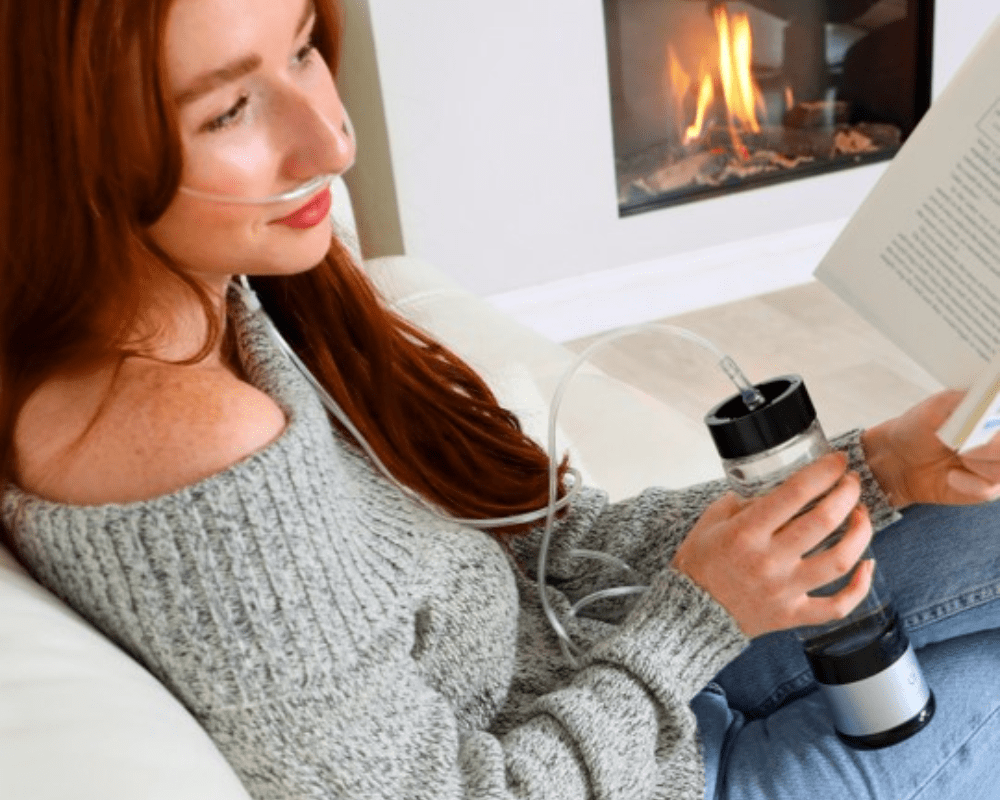
This is one of the claims I continue to push back on. A hydrogen water bottle is designed primarily to dissolve H₂ into water. Some manufacturers add a cannula outlet and then market the same device for inhalation.
That should not automatically be interpreted as therapeutic hydrogen inhalation.
H2HUBB uses separate output standards for inhalation devices. Our smaller portable-inhalation category requires substantially more measured H₂ flow than the low gas output typically associated with bottle accessories, and our full-size pure-H₂ systems have a higher minimum standard again.
If inhalation is your goal, use a device designed and tested for inhalation rather than assuming a water bottle with tubing is equivalent.
Our full inhalation guide explains hydrogen flow, inhaled H₂ concentration, pure H₂, oxyhydrogen, mixed-air systems, safety, and why delivery design matters.
How Not to Get Duped When Buying a Hydrogen Water Bottle
If I were buying a bottle today and had no relationship with the manufacturer, these are the questions I would ask before spending money:
- What is the independently measured average H₂ concentration?
- What is the bottle volume?
- How many milligrams of H₂ does one normal cycle actually deliver?
- How long is the cycle?
- Was the bottle tested for chlorine and ozone in the drinking water?
- Does the product use PEM/SPE technology, and how is the anode side managed?
- What type of water can I safely use?
- Is the advertised number an average or only the highest peak?
- Who performed the testing?
- Can I see the actual test report?
If a company cannot answer basic questions about concentration, dose, test method, and safety, that tells me a lot more than a flashy ppm claim.
This is the point of H2HUBB. We do the testing, read the research, look at the design, document the limitations, and then help consumers compare products without buying blindly.
Hydrogen Water Bottle FAQ
Do hydrogen water bottles actually work?
Yes—well-engineered bottles can produce meaningful concentrations and doses of dissolved molecular hydrogen. The key is verifying the actual output. H2HUBB has independently measured modern portable bottles producing several milligrams of dissolved H₂ per liter and more than 1–2 mg of H₂ in a single serving.
What hydrogen concentration should I look for?
I would not choose a bottle from concentration alone. Look at the measured average mg/L together with bottle volume and calculate the total H₂ dose per serving. H2HUBB’s current portable-generator standard requires at least 0.8 mg of H₂ within the serving plan without requiring more than 1 liter of water, but many approved products substantially exceed that minimum.
Is a higher-ppm hydrogen water bottle always better?
Not automatically. Higher verified concentration can increase the dose available in a smaller serving, which is valuable, but reliability, cycle time, pressure management, water compatibility, safety, and contamination testing still matter. I would rather have a consistently verified bottle than an unstable product advertised from one extreme peak result.
What does research suggest about hydrogen water health benefits?
The human and preclinical literature continues to suggest therapeutic potential for hydrogen-rich water across areas involving oxidative stress, inflammation, metabolism, exercise, recovery, and other biological systems. The strength of evidence varies by condition, and the optimal oral H₂ dose is not yet standardized.
How much hydrogen water should I drink?
There is no universal daily volume that applies to every bottle because the dissolved-H₂ concentration can differ dramatically. Think in terms of total hydrogen dose rather than liters of water alone. For example, a bottle delivering 2 mg of H₂ in 230 mL is very different from a weak bottle that requires multiple liters to reach the same amount.
Do I need a PEM/SPE hydrogen water bottle?
H2HUBB currently requires PEM/SPE cell technology for portable hydrogen water generators that we approve. The membrane architecture helps separate the electrolysis gas pathways, but the complete product design still needs to be evaluated for hydrogen output, water compatibility, and contamination control.
Can hydrogen bottles produce chlorine or ozone?
Poor electrolysis design or inappropriate water chemistry can create unwanted oxidative byproducts. That is why H2HUBB specifically tests approved portable hydrogen water generators for chlorine and ozone contamination in the drinking water instead of assuming every electrolytic bottle is automatically clean.
Can I use a hydrogen water bottle for inhalation?
I would not buy a water bottle as a substitute for a dedicated hydrogen inhalation machine unless its gas output has been independently measured and shown to meet an appropriate inhalation standard. The two product categories have very different output and delivery requirements.
How quickly should I drink hydrogen water after the cycle?
Drink it reasonably soon after production. Molecular hydrogen is a small gas and begins escaping once pressure is released and the bottle is opened. A good bottle should make the water convenient to consume shortly after the cycle finishes.
Where can I see bottles H2HUBB has tested?
Visit the H2HUBB Hydrogen Water Bottle collection to compare current product reviews, independent test results when available, pricing, specifications, and discounts.
The Problem With Hydrogen Water Bottles — H2Minutes Episode 70
This is the full video that originally drove this article. In it, I walk through why people want hydrogen water bottles, how the technology works, how concentration and volume determine H₂ dose, how the bottles compare with the research, which marketing gimmicks I would avoid, and why verification matters before you buy.
If you have read this far, the video should now make even more sense because the written guide above is the updated 2026 version of the same framework. The article reflects how H2HUBB tests and evaluates bottles today; the video lets you hear me teach the original concept directly.
Tywon Hubbard · Owner of H2HUBB · Creator of H2Minutes
Compare H2HUBB-Tested Hydrogen Water Bottles
Browse current hydrogen water bottles with independent H2HUBB reviews, measured test results when available, product specifications, current prices, and exclusive H2HUBB discounts.
Compare Hydrogen Water Bottles →Research & Sources
The research below includes foundational molecular-hydrogen science, human hydrogen-water trials, reviews, and sources from the original 2024 article.
Ohsawa et al. — Hydrogen acts as a therapeutic antioxidant (Nature Medicine) Randomized controlled trial of hydrogen-rich water, inflammatory responses and PBMC apoptosis 2025 randomized controlled pilot trial of hydrogen-rich water and exercise-related biomarkers Hydrogen-enriched water trial in mitochondrial and inflammatory myopathies Randomized study of hydrogen water, endurance and fatigue Systematic review of hydrogen-rich water research Recent review of hydrogen-rich water in oxidative stress-related diseases Original article source — Acta Biochimica et Biophysica Sinica Original article source — PMC5223313 Original article source — Medical Gas Research Original article source — Journal of Stroke & Cerebrovascular Diseases Original article source — Medical Gas Research review Original article source — Hydrogen research review Original article source — PMC4620630 Original article source — Scientific Reports Original article source — PubMed 23400965 Original article source — PMC4207582 Original article source — PMC2831093