
H2HUBB Certification & Performance Standards
H2HUBB maintains category-specific performance and safety standards for molecular hydrogen products. Our goal is to verify that products deliver meaningful hydrogen performance, function properly in real-world use, and meet the requirements we use before placing them within the H2HUBB marketplace.
Two Formal H2HUBB Designations
H2HUBB operates as an independent hydrogen authority combining performance verification, official designation, and structured consumer visibility.
H2HUBB Approved Products
A product-specific designation for hydrogen products that successfully complete the applicable H2HUBB evaluation and meet the performance and safety requirements for their category.
- Independent product-performance evaluation
- Category-specific H₂ performance standards
- Applicable safety and contamination checks
- Official H2HUBB test documentation
- Eligibility for H2HUBB marketplace recommendation

Premier Certified Companies
A broader company-level designation reflecting increased verification, authority recognition, and marketplace positioning within the H2HUBB ecosystem.
- Expanded company-level recognition
- Broader relationship with H2HUBB evaluation
- Increased marketplace authority positioning
- Structured consumer visibility
- Qualification requirements defined through H2HUBB certification pathways
H2HUBB does not stop at validation. Products that qualify can be strategically positioned within our marketplace and media ecosystem so independent verification is connected directly to consumer education and discovery. Approval is never guaranteed before evaluation.
Standards by Product Category
These are H2HUBB’s minimum qualification thresholds for the product categories below. A product must also function properly and satisfy applicable safety requirements during evaluation.
Hydrogen Infusion Machines (HIMs)
Flow-through systems that typically use PEM/SPE membrane technology to infuse source water with pure hydrogen gas without intentionally altering the water’s pH.
- 0.8 mg/L (ppm) dissolved H₂ consistently
- Dispensing flow rate of at least 0.4 L/min
- Must support approximately 1–3 mg H₂/day through 1–2 L of water consumed throughout the day
- Must not contaminate drinking water with chlorine (Cl₂)
- Must not contaminate drinking water with ozone (O₃)
Batch-Pressurized Chamber HIMs
Batch systems connect to a water source or reservoir and use PEM/SPE technology to produce pure H₂ for pressurized infusion. Typical batches range from approximately 2–5 L.
- 1.6 mg/L (ppm) or higher consistently
- Dispensing flow rate of at least 1 L/min
- Approximately 0.8–1 mg H₂/min
- Must allow approximately 1–3 mg H₂/day while drinking 1 L of water or less
- Batch-production time no longer than 45 minutes
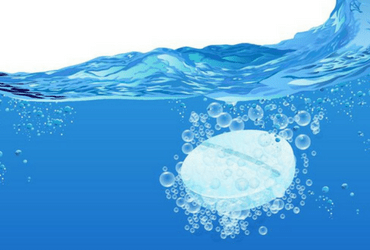
H₂ Effervescent Tablets
Hydrogen tablets commonly use elemental magnesium to generate H₂ in water and can provide a portable method of producing hydrogen-rich water.
- 0.8 mg/L (ppm) dissolved H₂ consistently
- Prepared water must remain palatable
- Must allow approximately 1–3 mg H₂/day while drinking 1 L of water or less
Portable Hydrogen Water Generators
Small battery-operated devices that produce hydrogen-rich water on demand, typically in a 250–500 mL serving. Most qualifying designs use PEM/SPE technology.
- Must utilize a PEM/SPE H₂ cell assembly
- Must not contaminate drinking water with ozone
- Must not contaminate drinking water with chlorine
- Cycle time no longer than 20 minutes
- Must provide at least 0.8 mg H₂ within a practical daily serving pattern not exceeding 1 L of water
Pure Hydrogen Inhalation Devices
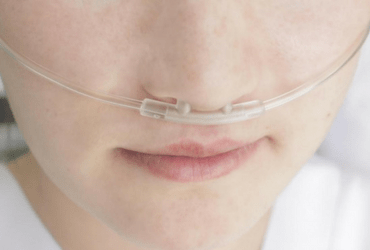
These systems typically use distilled water and PEM/SPE technology to produce pure H₂ gas for inhalation while minimizing the potential for unwanted contaminants in the gas stream.
- At least 300 mL/min of H₂
- At minimum 4N H₂ gas purity (99.99%)
- Must include some form of H₂ gas filtration
- Must include an appropriate safety mechanism
Oxyhydrogen Inhalation Devices
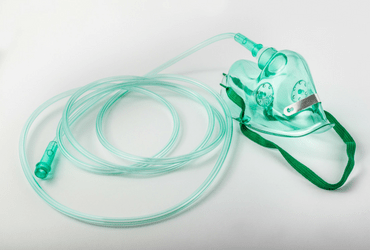
Oxyhydrogen systems use water electrolysis to generate hydrogen and oxygen for inhalation. H2HUBB evaluates both delivered H₂ exposure and category-specific safety considerations.
- Must deliver approximately 1–4% inhaled H₂ at typical resting adult breathing rates
- Must include H₂ gas filtration
- Must include appropriate safety mechanisms
- Must pass H2HUBB electrolyte-capture testing
- Must use H2HUBB-approved electrolytes, such as NaOH where applicable
Prepackaged Hydrogen Water
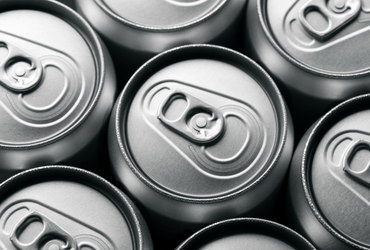
Ready-to-drink hydrogen products may use plain or flavored water and require packaging capable of limiting H₂ loss during storage.
- Must use adequate H₂-retaining packaging, such as an aluminum can
- Must contain at least 0.4 mg H₂ per container
- Must allow approximately 0.8–1 mg H₂/day within 2 containers or fewer
Hydrogen Water Pitchers
Hydrogen pitchers typically hold 1–2 L of water and use PEM/SPE technology to produce H₂ during a timed cycle before dispensing.
- Must utilize a PEM/SPE H₂ cell assembly
- Must produce 0.8 mg/L (ppm) consistently
- Must provide at least 0.8 mg H₂ within the reservoir volume
- Must not contaminate drinking water with chlorine
- Must not contaminate drinking water with ozone
- Must allow approximately 1–3 mg H₂/day
Water Ionizers
Water ionizers use electrolysis to produce alkaline and acidic streams. Dissolved H₂ output can be highly dependent on source-water conductivity and mineral content.
- Must produce 0.8 mg/L (ppm) consistently
- Water flow rate of at least 1 L/min
- Approximately 0.8–1 mg H₂/min
- Hydrogen water must remain below pH 9.5 while meeting the minimum dissolved-H₂ standard
- Source water must be adequate for efficient electrolysis, generally TDS above 100 ppm
- Must allow approximately 1–3 mg H₂/day while drinking 2 L of water or less
Hydrogen Bath Products
Hydrogen bath products are designed to introduce H₂ into whole-body baths, foot baths, or other water-based applications using powders, tablets, or electrolytic devices.
- Minimum of 0.3 mg/L (ppm)
- Minimum concentration must be achieved in at least 3 L of water
- Must reach the threshold at typical bath-water temperatures of approximately 95–100°F
- Must reach the threshold within 20 minutes
- Must include adequate safety features

Portable Hydrogen Inhalation Devices
Portable systems generally use distilled water and PEM/SPE technology to produce pure H₂ or H₂ mixed with air for inhalation.
- At least 150 mL/min of H₂
- 150 mL/min is approximately >1% H₂ at resting breathing rates of 4–6 L/min
- At minimum 4N H₂ gas purity (99.99%)
- Must include H₂ gas filtration
- Must include an appropriate safety device

Hydrogen Goggles
Hydrogen goggles are generally used as an accessory with an H₂ system to deliver hydrogen gas locally around the eyes through connected tubing.
- Must fit securely with minimal to no air gaps
- Must be used with PEM/SPE technology
- H₂ gas flow supplied to the goggles must be at least 10 mL/min
- Session duration must be at least 30 minutes
How H2HUBB Applies These Standards
The numbers matter, but product qualification is not reduced to one concentration or one peak reading. H2HUBB evaluates the product as a complete delivery system.
Reproducible H₂ Output
We place greater value on repeatable performance than on one unusually high peak measurement.
Concentration + Volume
For hydrogen water, total H₂ delivered matters in addition to the concentration shown in mg/L.
Category-Specific Controls
Contamination, pressure, electrolytes, gas purity, filtration, and other safety factors are evaluated where relevant.
Practical Function
A qualifying product must function in a way that allows the intended H₂ exposure to be achieved under realistic use conditions.
H2HUBB’s standards are not designed to be unnecessarily difficult to meet. If a hydrogen product is properly designed, manufactured, operates as intended, and consistently exceeds the applicable minimum performance threshold, the standards should generally be straightforward for a quality product to meet. Testing remains independent, so approval cannot be guaranteed before evaluation.
Want H2HUBB to Evaluate Your Hydrogen Product?
Review the available approval pathways, testing options, and marketplace opportunities for manufacturers seeking independent H2HUBB evaluation.