
Why This Testing Upgrade Matters
When we say a hydrogen product produced 4 mg/L, 6 mg/L, 9 mg/L, or more, that number needs to mean something. It should come from a repeatable testing method, a controlled protocol, and equipment capable of measuring the concentration being produced.
That is why the Unisense Hydrogen Microsensor became such an important addition to H2HUBB. It gives us a research-grade electrochemical method for measuring hydrogen directly and in real time, while allowing us to compare those results with the other methods we have used for years.
Quick Answer
The Unisense H₂ Microsensor is a laboratory research sensor that measures hydrogen using an electrochemical signal generated at a platinum electrode. Unisense describes its standard H₂ sensor as having a linear response, a detection limit around 0.3 µM in water, and a standard dissolved-hydrogen range up to 2,000 µM, with high-range customizations available. H2HUBB uses a custom configuration designed for hydrogen-product testing at concentrations up to 20 mg/L.
Key Takeaways
- H2HUBB uses multiple hydrogen testing methods rather than relying on one tool for every situation.
- The Unisense H₂ Microsensor gives us a real-time electrochemical method for measuring dissolved hydrogen without transferring the sample to another container.
- Unisense currently lists a standard H₂ sensor range of 0–2,000 µM dissolved H₂, with high-range options available above that range.
- H2HUBB’s custom Unisense sensor was configured to measure hydrogen-product concentrations up to 20 mg/L.
- Our goal is not simply to generate a number. It is to determine whether a hydrogen product actually performs at a level that supports its claims and meets H2HUBB’s performance standards.
Testing Should Connect Product Claims to the Research
The reason we measure hydrogen concentration and hydrogen output is to compare real product performance with the levels used in molecular hydrogen research. You can review the standards we use on our H2HUBB Product Performance Standards page and explore the wider scientific evidence in the H2HUBB Molecular Hydrogen Research Library.
View H2HUBB Performance Standards →H2HUBB now officially uses the Unisense Hydrogen Microsensor to measure hydrogen gas in water—or in virtually any substance. This naturally raises the question: What is the Unisense H₂ Microsensor, and why does it matter that H2HUBB has it for testing hydrogen products?
To answer that, it’s important to first explain why we test hydrogen products in the first place, and how we go about it.

Why H2HUBB Tests Hydrogen Products
Our company was established in 2016 with a single mission: to help consumers experience the real benefits of molecular hydrogen. From the very beginning, we made a deliberate decision not to sell hydrogen products directly. Why? Because the moment you directly profit from sales, your testing and evaluations can become compromised. We knew the only way to serve consumers—and the industry at large—was to operate objectively, without bias, and with integrity at the center of everything we do.
That commitment led to the creation of the H2HUBB testing, evaluation, and approval process. Working closely with hydrogen researchers and engineers, we developed internal hydrogen performance standards based on peer-reviewed science. These standards allow us to test devices in-house and determine whether they are truly safe, therapeutic, and reliable.
This matters because the hydrogen industry is at a crossroads. It is a young, emerging field filled with promise, but also plagued by misinformation, marketing gimmicks, and unverified claims. The reality is stark: the majority of products in this industry are sold off hype, not science—off marketing, not truth—off lies, not honesty and transparency. That is where H2HUBB comes in.
Our work provides a badly needed filter in this space. Over the last decade, we have tested more than 100 hydrogen products and currently recommend 40–50 products that meet our standards. Every year, more devices are submitted for evaluation. And every year, our mission stays the same: to give consumers a trusted, independent third-party source for peer-reviewed hydrogen therapy information and a list of products that have been verified against the same levels used in human medical research.
Our performance standards explain the minimum hydrogen output, dose, safety, and testing expectations we use across hydrogen water, inhalation, and other product categories.
H2HUBB Approved Testing Methods
To achieve this, H2HUBB has built one of the most comprehensive testing arsenals in the industry.
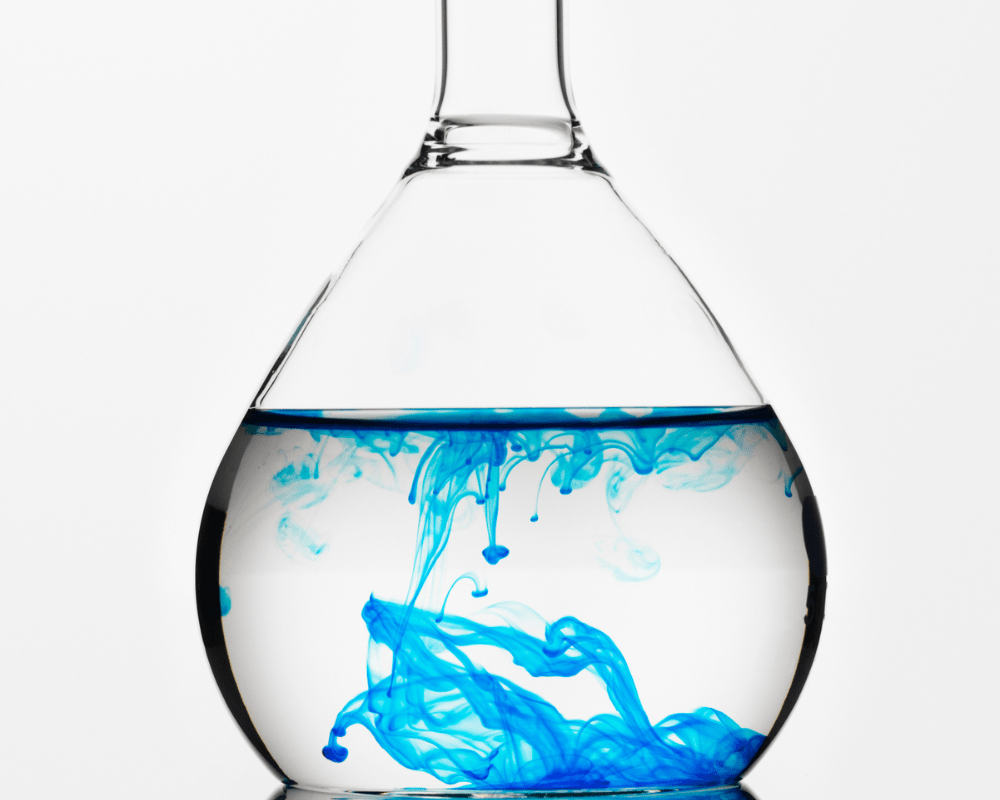
Measuring Dissolved Hydrogen in Water
1. Titration (Oxidimetry)
The H2Blue titration method uses a methylene blue–platinum (MB-Pt) reagent that reacts with dissolved hydrogen in water. Each drop corresponds to 0.1 mg/L of hydrogen. While critics often dismiss H2Blue as inaccurate, this is a misunderstanding. The problem lies not in the chemistry—it is a sound redox titration method—but in user error. When performed under controlled protocols, H2Blue results fall within 2–15% of gas chromatography (GC), the recognized gold standard.
2. Gas Chromatography (GC)
When further validation is needed, or when titration presents challenges, we send samples to H2 Analytics, a U.S.-based hydrogen laboratory, for GC testing. This remains the most precise method for dissolved hydrogen concentration in the industry.
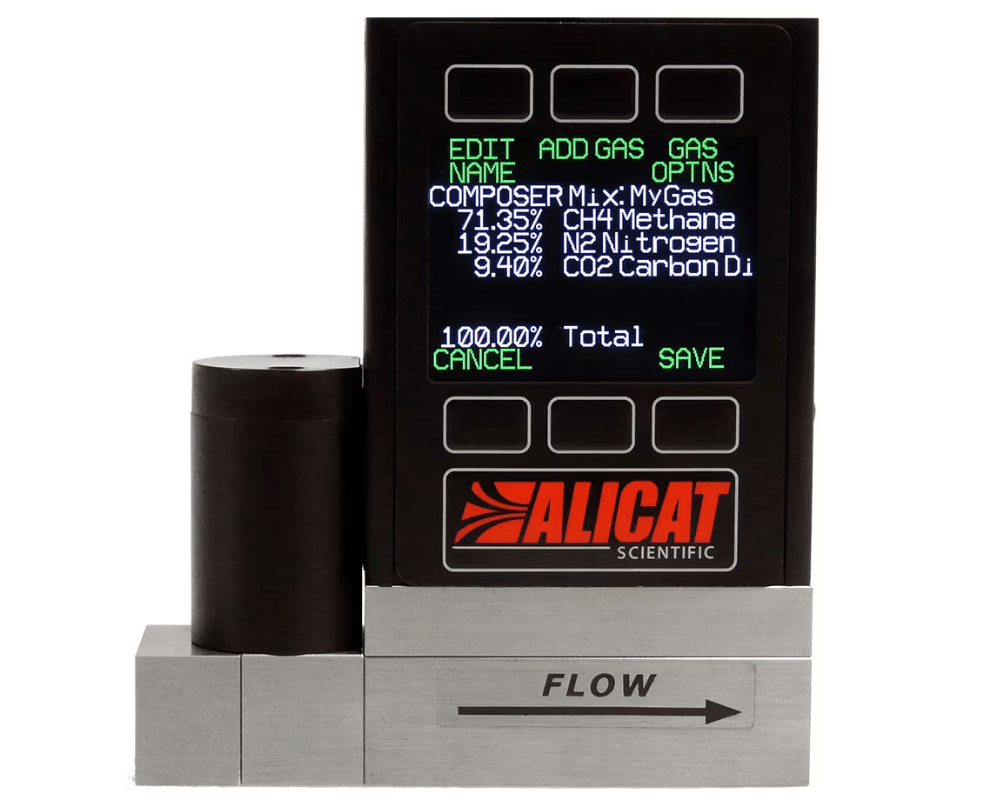
Measuring Hydrogen Gas Production
1. Gas Displacement Method
By capturing gas in a calibrated container, we can directly measure hydrogen production volume. This method confirms whether devices deliver the output they claim.
2. Electrolysis Monitoring
Because hydrogen production scales with current, we track amperage and voltage at the hydrogen cell. At 100% efficiency, 1 amp = 7.6 mL/min of H₂ at SATP—a reliable baseline for evaluating theoretical vs. actual performance.
3. Mass Flow Meters
Using Alicat Mass Flow Meters, we measure hydrogen gas flow with laboratory precision, accounting for pressure and temperature changes in real time.
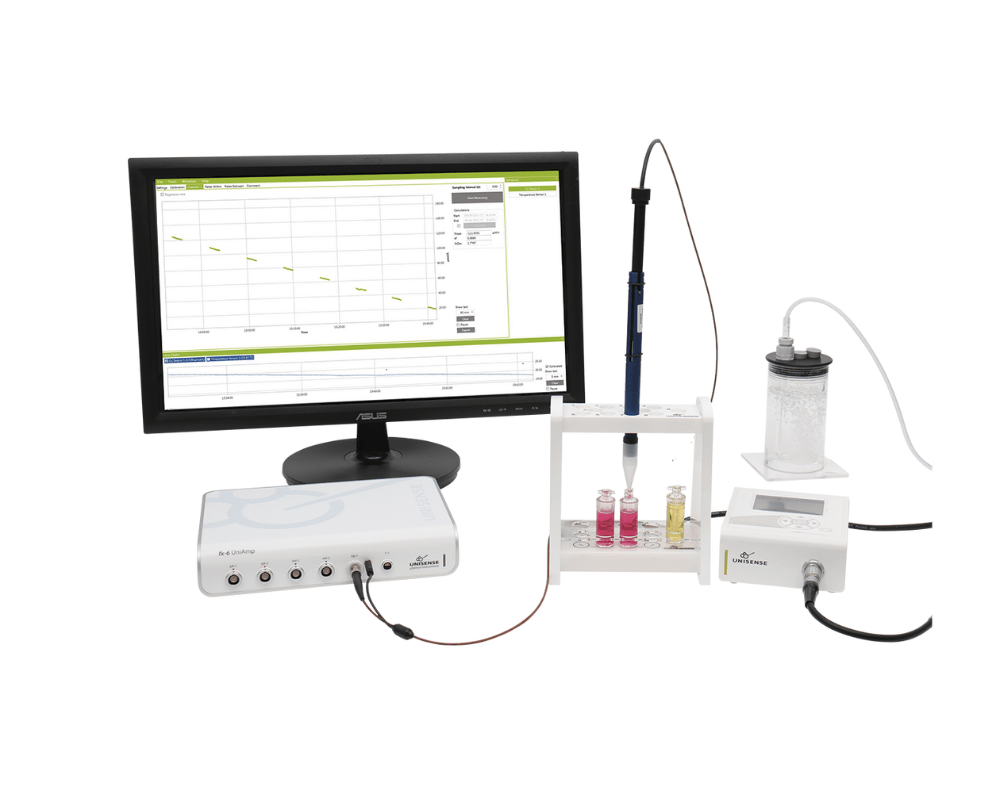
Why the Unisense H₂ Microsensor Matters
Until now, our water testing relied heavily on H2Blue, applied with strict protocols to minimize human error. Many of our test results have been validated within 5–10% of GC readings. Still, titration inherently introduces human error, and for years, critics have used this fact to question results—no matter how careful or precise the testing.
The Unisense H₂ Microsensor changes that conversation completely.
This is not a consumer-level tool. It is a lab-grade electrochemical research instrument, costing well over $10,000, designed for scientists conducting precise hydrogen measurements in water, blood, plasma, or any solution. The sensor achieves 95–97% accuracy compared to GC—with an distinction, it allows for real-time measurements without sample transfer or loss.
Unisense currently lists the standard H₂ sensor measurement range at 0–2,000 µmol/L of dissolved hydrogen, which is approximately 4 mg/L (ppm) in water. That range is sufficient for many laboratory and research applications. But hydrogen products continue to evolve, with some now producing concentrations well above that standard range. That’s why H2HUBB acquired a custom-made Unisense H₂ Microsensor calibrated for µmol/L precision and an extended range up to 20 mg/L (ppm)—approximately five times the dissolved-hydrogen range of the standard Unisense H₂ sensor.
This means that H2HUBB can accurately measure not just trace and therapeutic concentrations, but also the very highest concentrations achieved by cutting-edge hydrogen products—without saturation, without underestimation, and without guesswork.
A Technical Point Worth Making About the Sensor
Unisense describes its H₂ sensor as a Clark-type sensor that measures hydrogen partial pressure. Hydrogen diffuses through a silicone membrane to a polarized platinum anode, and the resulting current changes linearly with the hydrogen level at the sensor tip. In a calibrated water measurement, that signal is used to quantify dissolved hydrogen.
Unisense currently lists the standard H₂ sensor range as 0–2,000 µM dissolved H₂, a standard detection limit of 0.3 µM in water, a linear response, and a typical 90% response time under 15 seconds. Importantly for what we are doing at H2HUBB, Unisense also offers high-range customization above 2,000 µM. Our custom 20 mg/L configuration is therefore not the same thing as the standard off-the-shelf measurement range.
Unisense Hydrogen Sensor — Official Technical Data
Unisense Hydrogen Sensor Measurement Principles
How the Unisense H₂ Microsensor Works
The Unisense H₂ Microsensor is an amperometric electrochemical sensor. At its core, the sensor tip contains a hydrogen-permeable membrane covering a platinum anode. When hydrogen is present in a solution, molecules diffuse across the membrane and are oxidized at the electrode. This oxidation generates an electrical current directly proportional to the hydrogen concentration.
Because the relationship between hydrogen concentration and current is linear, and because the sensor is factory-calibrated against certified gas standards, the readings are both quantitative and highly precise. The result is real-time, research-grade data, sensitive enough to detect trace hydrogen levels and powerful enough to measure up to 20 mg/L (ppm) of dissolved hydrogen gas with accuracy.
Our newer product pages show how the Unisense H₂ Microsensor is being used to report measured dissolved-hydrogen averages, peaks, and dose calculations on real hydrogen products.
H2HUBB Approved Testing Methods
H2HUBB is not the same type of laboratory as H2 Analytics, but this upgrade elevates us into a similar class of capability. With the acquisition of our custom Unisense H₂ Microsensor, H2HUBB now stands in an elite category—one of only two organizations in the entire U.S. hydrogen industry with this level of testing technology. H2 Analytics remains the gold standard for hydrogen research laboratories for H2 water, but our custom 20 mg/L sensor extends far beyond the standard Unisense dissolved-H₂ range of 0–2,000 µmol/L, giving H2HUBB a unique edge when testing higher-concentration hydrogen products.
This places our testing credibility on par with a hydrogen research laboratory. It also means that no consumer, no influencer, and no manufacturer in this space has the ability to test hydrogen products—whether in water, creams, lotions, beverages, or beyond—at the level H2HUBB now can.
What This Means for Consumers and the Industry
For consumers, the impact is simple but powerful: every single hydrogen water product we recommend is now tested with research-grade accuracy. This eliminates any lingering doubt about whether a hydrogen water bottle, tablet, or inhalation device actually delivers therapeutic hydrogen levels. Consumers can purchase with confidence, knowing that H2HUBB’s recommendations are based on lab-quality validation—not marketing spin.
For the hydrogen industry, this raises the bar. Manufacturers can no longer hide behind exaggerated claims or dismiss results as “just H2Blue.” The age of ambiguity is ending. With Unisense technology—especially at our extended range of up to 20 mg/L—we bring the clarity, accountability, and scientific rigor this industry desperately needs.
This isn’t just another upgrade to our toolbox. It is a watershed moment for H2HUBB and for the entire hydrogen industry. Since 2016, our work has been about one thing: science, transparency, and consumer trust. By adopting the Unisense H₂ Microsensor, we double down on that mission and reaffirm our role as the most credible, objective, and scientifically rigorous voice in hydrogen health.
Summary
In short: With our custom Unisense H₂ Microsensor, H2HUBB now tests hydrogen products up to 20 mg/L with unmatched precision—offering consumers peace of mind, holding manufacturers accountable, and setting a new standard for integrity in the hydrogen industry.
Unisense Hydrogen Microsensor FAQ
What is the Unisense Hydrogen Microsensor?
It is a research-grade Clark-type electrochemical hydrogen sensor made by Unisense. Hydrogen diffuses through a membrane at the sensor tip and is oxidized at a platinum electrode, creating an electrical current that changes linearly with the hydrogen level being measured.
Can the Unisense H₂ sensor measure hydrogen directly in water?
Yes. One of the reasons the system is so useful for our work is that the sensor can measure hydrogen directly in the liquid phase. Unisense also designs the technology for gas-phase measurements and other research applications.
What is the normal measurement range of a Unisense Hydrogen Sensor?
Unisense currently lists a standard dissolved-H₂ range of 0–2,000 µM for its H₂ sensor, with high-range customization available above 2,000 µM. H2HUBB uses a custom configuration built for the higher concentrations we encounter when testing modern hydrogen products, with a stated range up to 20 mg/L.
Why use a microsensor if H2HUBB already has H2Blue and GC testing?
Because each method has strengths. H2Blue gives us a fast titration method, GC provides strong third-party laboratory validation, mass flow and displacement methods address hydrogen gas output, and the Unisense sensor gives us a direct real-time electrochemical measurement. Having multiple methods gives us more ways to cross-check product performance instead of depending on one number from one tool.
Where can I see H2HUBB Unisense test results?
H2HUBB now publishes Unisense measurements on current product reviews when that method is used. Examples include hydrogen water products such as the Piurify Hydrogenator Flask and other independently evaluated products across the H2HUBB marketplace.
Compare H2HUBB-Tested Hydrogen Products
If you are shopping for a hydrogen product, do not rely on concentration claims alone. Review the measured results, product design, safety information, current pricing, and available H2HUBB discounts before you buy.
Explore Approved Hydrogen Products →