
What the Research Says About Molecular Hydrogen and Autoimmunity
Molecular hydrogen and autoimmunity is an emerging research area examining how H₂ may interact with inflammation, oxidative stress, immune-cell signaling, mast cells, gut-barrier function, and other biological processes involved in immune dysregulation.
This article is an in-depth educational review of molecular hydrogen autoimmune disease research, molecular hydrogen inflammation research, molecular hydrogen immune-system regulation, and molecular hydrogen mast-cell signaling. It is intended to explain the scientific evidence and biological mechanisms while keeping the limits of the current research clear.
Key Takeaways
- Molecular hydrogen is being studied for broad immunomodulatory effects rather than for one single inflammatory pathway.
- Research discussed in this article includes inflammation, oxidative stress, mast-cell activity, gut-barrier integrity, immune tolerance, and autoimmune disease models.
- The evidence includes animal research, mechanistic studies, human rheumatoid arthritis research, and newer human autoimmune reports, collectively suggesting that molecular hydrogen has therapeutic potential for autoimmune and immune-system dysfunction.
- Product quality, hydrogen dose, administration method, individual sensitivity, and medical context can all matter when interpreting an H₂ response.
Explore 1,600+ Molecular Hydrogen Studies
H2HUBB’s Molecular Hydrogen Research Library is the evidence hub for this article and for the wider H2HUBB educational site. Explore more than 1,600 published molecular hydrogen studies and scientific records, including human clinical evidence, hydrogen-rich water research, inflammation, immune regulation, safety, delivery methods, and other research topics.
Explore the H2HUBB Research Library →The immune system is one of, if not the most complex systems in the human body. It incorporates a vast number of immune cells, including mast cells, macrophages, microglia, T-reg cells, T-helper cells, neutrophils, B cells, and many more. It incorporates organs, hormones, countless protein signal molecules, and operates in every area of the human body, even down to the hair follicles.
It also incorporates immune operations such as DAMPs and PAMPs, innate immune responses, and adaptive immune responses. This whole system is built to protect and restore. But what happens when that same complex system is reprogrammed to harm what it was meant to protect or tear down what it was meant to restore?
In a nutshell, this is called autoimmunity.
Autoimmunity occurs when the immune system mistakenly targets the body’s own healthy cells, tissues, or organs. This can contribute to many different disease states, including rheumatoid arthritis, multiple sclerosis, type 1 diabetes, lupus, inflammatory bowel disease, autoimmune thyroid disease, psoriasis, and others. Some autoimmune disorders are more organ-specific, meaning they primarily affect one tissue or organ. Others are systemic and can affect multiple tissues, organs, and systems throughout the body.
This article will not address everything about autoimmunity, one, because medical research is still elucidating how it works, why it manifests in some individuals, and how genetics, immune triggers, infections, environmental exposures, and cellular dysfunction all play a role. This article will focus on molecular hydrogen as a therapeutic agent that shows great promise in immunomodulation, hypersensitivity regulation, autoimmunity, and helping restore the immune system toward more homeostatic processes.
There are countless studies showing that molecular hydrogen gas may mediate its effects in various disease states through modulating immune cells or immune system processes, leading to positive health outcomes. This article is focused on the medical research and the health potential of hydrogen gas for autoimmune disorders.
We will also touch on why some people with highly dysregulated immune systems might experience what I would call “adjustment responses or reactions” to hydrogen therapy, and why an unfavorable experience might not automatically mean H₂ is causing harm, but may sometimes be a physiological sign that H₂ is interacting with an already reactive immune system.
That being said, this needs to be stated clearly: not every negative response should be ignored or automatically assumed to be beneficial. There are many hydrogen devices on the market, and not all of them are safe or have undergone proper safety testing. It is possible for someone to attribute a negative response to hydrogen gas itself when, in fact, the reaction could be caused by another agent, contaminant, or byproduct produced by the device.
If someone has a severe, persistent, or concerning reaction, they should stop, lower the dose, speak with a qualified healthcare provider, and also reach out to H2HUBB about the device they are using to see if we have evaluated it. However, for some individuals with highly sensitive immune systems, the body’s initial response to a beneficial regulatory signal may not always feel beneficial in the beginning.
For a comprehensive breakdown of hydrogen inhalation concentrations, delivery methods, pure H₂, oxyhydrogen, H₂ mixed with air, device design, dosing considerations, and safety, read the H2HUBB Hydrogen Inhalation Therapy Guide. For a focused safety review, see our hydrogen inhalation safety guide.
First, let’s discuss what molecular hydrogen is, how it functions as a biological agent, and why the research is exploding with excitement regarding these findings.
What is Molecular Hydrogen?
Molecular hydrogen, also known as hydrogen gas, H₂, dihydrogen, diatomic hydrogen, etc., is the smallest and lightest gas in the universe. It is essentially the gaseous state of hydrogen, which is first on the periodic table of elements.
When most people hear the word hydrogen, they immediately think of hydrogen atoms or hydrogen ions without realizing it, depending on their background or context. Hydrogen atoms are the form of hydrogen that constitute water, H₂O, and hydrogen ions, also called cations, dictate the pH of water or make things more acidic. Thus, depending on your background knowledge, your immediate assumption when you hear the word hydrogen goes to these places: water, acid, or fuel/energy source.
We do not normally think of the different forms of hydrogen, or that there is a gas form that may benefit us or improve our health.
There are several species or forms of hydrogen:
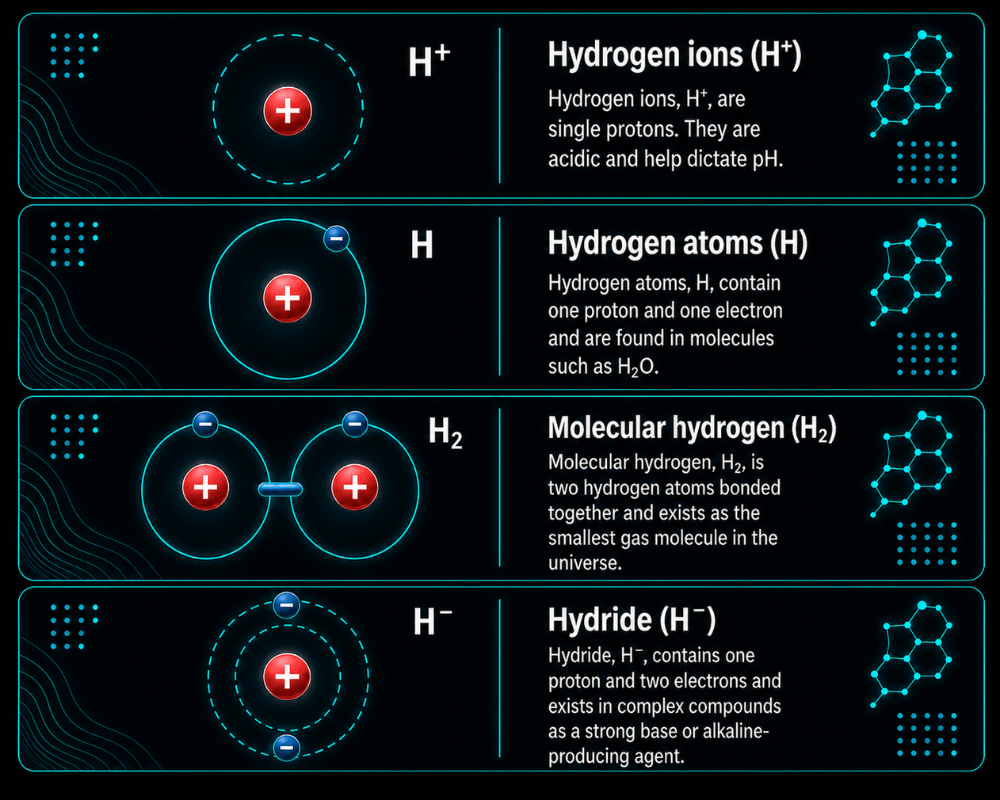
For the purpose of this article, we are discussing the health potential of molecular hydrogen, or hydrogen gas, as a biological gas.
Molecular hydrogen, biologically speaking, can be classified as a gaseous signal modulator or gaseous gene modulator. This is a big fancy way of saying that molecular hydrogen primarily induces many of its therapeutic effects by transmitting signals to cells and altering the way those cells express genes, regulate function, and carry out biological processes.
Research shows that molecular hydrogen alters, influences, or regulates essential cellular processes in virtually every cell type in the human body. Because of this, H₂ has been demonstrated to have numerous biological effects in human and animal research, including regulation of antioxidant and oxidative stress systems, anti-inflammatory effects, anti-cell-death effects, bioenergetic effects, anti-allergic effects, and so much more.
There are now so many of these effects that the research suggests molecular hydrogen has pleiotropic effects. This means H₂ does not appear to target only one pathway, one gene, or one biological process. It appears to regulate and mediate its effects through the expression of numerous genes and signaling pathways, not simply one gene. Molecular hydrogen essentially may have hundreds to thousands of effects throughout the human body systemically, all at the same time.
Currently, as of 2026, there are more than 3,100 scientific studies and publications worldwide exploring its potential medical and therapeutic benefits. Research has demonstrated molecular hydrogen’s therapeutic potential across more than 200 animal and human disease models, with positive findings reported in every major organ and organ system of the body.
Studies have also shown that molecular hydrogen may regulate hundreds of biomolecules, with no known harmful or cytotoxic effects reported in the scientific literature when used appropriately. This also includes more than 250 human clinical studies and trials, with many more currently underway. Molecular hydrogen has also been investigated in Phase 1, Phase 2, and Phase 3 clinical trials across various disease states, with additional clinical research continuing to expand.
If you want to learn more about its benefits, you can visit our H₂ Benefits page on H2HUBB.
Continue into H2HUBB’s human clinical-study archive to review individual human evidence records alongside the broader Research Library.
Molecular Hydrogen Regulates Inflammation

This therapeutic promise has led to the investigation of hydrogen gas in many inflammatory models and studies to better understand how molecular hydrogen regulates inflammation. Thus far, molecular hydrogen appears to influence a wide spectrum of immune cells, including mast cells, macrophages, microglia, T-reg cells, T-helper cells, neutrophils, B cells, leukocytes, monocytes, and lymphocytes.
It does not simply stop there either.
Research shows that H₂ can inhibit immune cell infiltration, improve the immune cell environment, and help regulate blood vessel permeability. H₂ has been shown to shift certain immune cells from a more inflammatory M1-like state toward a more anti-inflammatory or repair-oriented M2-like state, such as in microglia and macrophages.
Molecular hydrogen appears to induce these effects through regulating key inflammatory proteins and signal molecules, such as NF-κB, TNF-α, NFAT, interleukins such as IL-6, IL-33, IL-1β, IL-8, IL-10, IL-22, IL-4, IL-15, and others, as well as COX-1, COX-2, and related inflammatory pathways.
H₂ may also decrease oxidative stress by lowering some of the most damaging and toxic molecules in the human body, including hydroxyl radicals, •OH, and peroxynitrite, ONOO⁻. It also appears to induce the activation of antioxidant defense pathways, such as Nrf2, which helps cells regulate their own internal defense systems.
H₂ has even been seen to induce anti-inflammatory states through altering how inflammatory cells produce energy, whether through oxidative phosphorylation or glycolysis. This matters because immune cells do not only change their inflammatory behavior through cytokines. They also change based on their energy metabolism. Inflammatory immune cells often use energy differently than regulatory or repair-oriented immune cells.
Essentially, H₂ can systemically upregulate or downregulate inflammatory cytokines, anti-inflammatory cytokines, and chemokines in a way that may improve immune system function and immune response.
All of this adds up to show that molecular hydrogen does not appear to act simply as an agent that targets one inflammatory pathway. Instead, it appears to influence many pathways at the same time, helping reprogram and coordinate a new direction for an immune response or the immune system. This is what I was referring to when I said H₂ appears to have immunomodulatory effects.
Immunomodulation is important because autoimmunity is not simply an “overactive” immune system. It is a dysregulated immune system. The immune system is responding in the wrong way, toward the wrong target, or with the wrong level of intensity. The goal is not necessarily to shut the immune system down. The goal is to help the immune system regain proper regulation, tolerance, and homeostatic function.
Let’s look at some studies and cases of this effect of hydrogen and what it may mean for autoimmunity.
Molecular Hydrogen and Mast Cell Activation
One area of interest is mast cell activation.
Mast cells are immune cells that help regulate allergic responses, inflammatory signaling, blood vessel permeability, tissue defense, tissue repair, and communication between the immune system and nervous system. They are located throughout the body, including the skin, gut, lungs, connective tissue, blood vessels, and areas associated with the brain and blood-brain barrier.
Mast cells are often thought of only in regard to allergies, histamine, or anaphylaxis, but this is too narrow of a view in my opinion. Mast cells are more like local immune surveillance cells. They are constantly reading the tissue environment around them and responding to signals of danger, injury, infection, stress, and inflammation.
This is important because mast cells do not simply release histamine. Their secretome is much larger than that. The secretome refers to the total collection of biomolecules, proteins, and signaling agents secreted by cells into their environment. The mast cell secretome includes a laundry list of molecules: histamine, serotonin, dopamine, tryptase, chymase, carboxypeptidase A3, heparin, cytokines, chemokines, growth factors, prostaglandins, leukotrienes, and so many other inflammatory and regulatory molecules.
In other words, mast cells carry a dump truck worth of biological mediators that can influence so many other systems and cells, such as immune cells, non-immune cells, blood vessels, nerves, fibroblasts, epithelial cells, and the extracellular matrix. This means mast cells do not only regulate allergic reactions. They can help shape the entire local tissue microenvironment.
This is one reason mast cells may matter so much in autoimmune and hypersensitivity-related conditions. They are not always the primary cause, but they can contribute to the inflammatory environment, vascular permeability, tissue remodeling, fibrosis, neurological sensitivity, pain, itching, swelling, gut symptoms, airway symptoms, brain fog, and many other immune-related symptoms.
In hypersensitive immune systems, mast cells can become overly reactive. This means their activation threshold may become too low, causing them to release inflammatory mediators too easily. When mast cells degranulate, which is basically a term that means they release their molecules, they can release histamine, cytokines, proteases, and other inflammatory molecules that can contribute to swelling, itching, flushing, gut symptoms, neurological symptoms, airway symptoms, headaches, fatigue, and more.
What makes this even more important is that mast cells can become chronically activated in an inflammatory tissue environment. When they remain inside an inflammatory state too long, they can increase receptor expression, including receptors such as FcεRI and MRGPRX2. This can make them more sensitive to activation signals in that tissue environment. In simple terms, the longer the tissue environment stays inflamed, the easier it may become for mast cells to keep reacting.
This is one of the reasons I believe mast cells help explain why some people with chronic inflammatory disorders, autoimmunity, mast cell activation, chemical sensitivities, or highly reactive nervous systems feel like their body is responding to everything.
Their mast cells may not be resting. They may already be primed in an inflammatory state.
Another critical finding in the research is that mast cell activation is closely linked to oxidative stress. Mast cells can produce intracellular and extracellular reactive oxygen species (ROS) during activation. This includes free radicals like superoxide, hydrogen peroxide, and downstream free radical signaling. These reactive molecules are not always bad.
At lower levels, ROS can act as important regulatory molecules. But when ROS becomes excessive and induces oxidative stress, it can increase mast cell activation, inflammatory mediator release, and tissue damage.
This is where molecular hydrogen comes in.
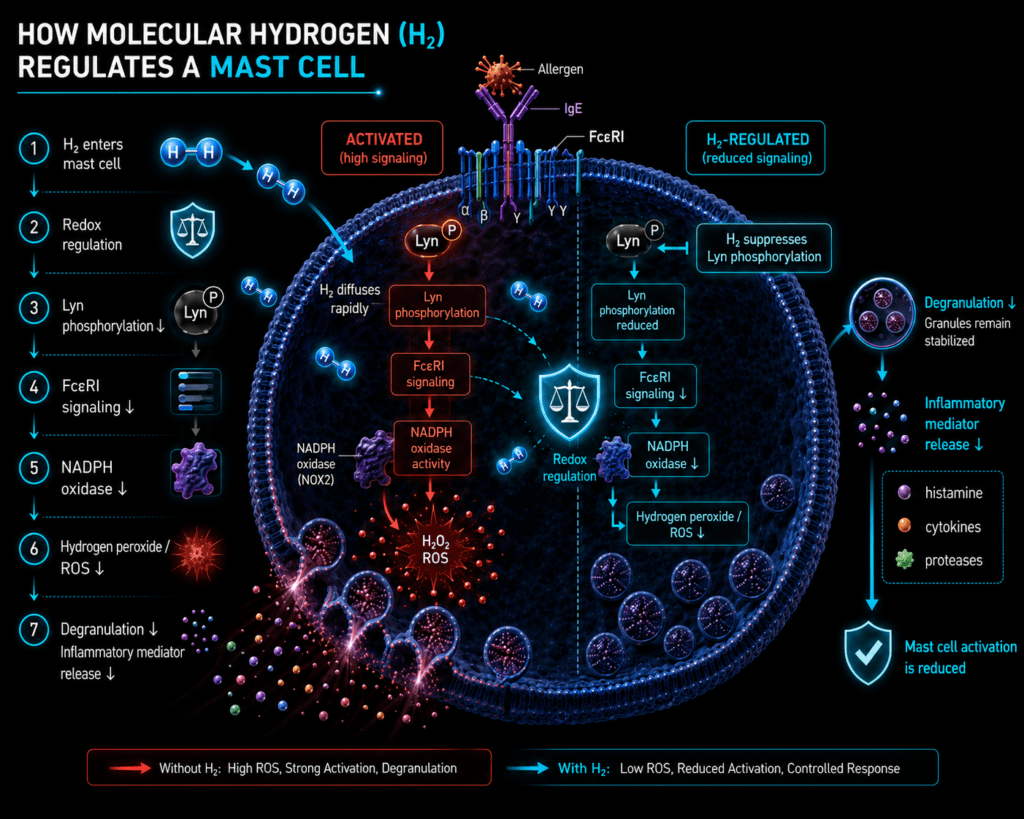
Molecular hydrogen appears to influence or regulate mast cells through multiple ways, including redox regulation, which refers to antioxidant activity and free radical balance. H₂ may lower excessive oxidative stress inside the mast cell and help interrupt the signaling pathways that drive degranulation. One of the most important mechanisms discussed in the research is something called the FcεRI-mediated pathway.
This is an essential mast cell activation pathway involved in allergic and immune reactions.
Research shows that molecular hydrogen can suppress FcεRI-mediated signal transduction and prevent mast cells from releasing inflammatory molecules. The way molecular hydrogen does this is fascinating and not so simple, so let’s walk through it.
H₂ has specifically been shown to attenuate or inhibit the phosphorylation of Lyn, which basically means it helps prevent the Lyn molecule from being turned “on.” Lyn is connected to the FcεRI pathway, and when this pathway is activated, it can contribute to mast cell degranulation.
By influencing this pathway, H₂ helps to inhibit the process of degranulation, reduce NADPH oxidase activity critical for oxidative bursts, and decrease hydrogen peroxide generation in mast cells. Thus, H₂ effectively lowers ROS in mast cells, which is one of the primary drivers of this pathway and inflammation. This matters because hydrogen peroxide and other ROS signals help drive the mast cell activation process.
This means H₂ may not simply “calm inflammation” in a general way. It appears to influence the actual intracellular switches that tell mast cells to release their inflammatory molecules.
In one molecular hydrogen study on intracerebral hemorrhage, basically a brain bleed, mast cell activation contributed to increased blood-brain barrier permeability and brain edema, also known as brain swelling. Hydrogen inhalation helped preserve the blood-brain barrier by preventing mast cell activation after the brain bleed. The research also reported that hydrogen reduced Lyn kinase phosphorylation, tryptase release, mast cell accumulation, and mast cell degranulation, which was accompanied by reduced brain edema and improved neurological status.
This is especially important because it connects mast cell regulation to blood-brain barrier protection, vascular permeability, inflammation, and neurological outcomes.
That matters for autoimmune and inflammatory disorders because many of these conditions involve not only immune activation, but also tissue-barrier disruption and neurological inflammation.
Another study on dermatitis, or eczema, found that hydrogen-rich water reduced the severity of eczema lesions and decreased IL-1β, IL-33, and mast cell infiltration. This is important because IL-33 is a major alarm cytokine involved in allergic inflammation, mast cell activation, epithelial stress, and immune hypersensitivity. Since H₂ can suppress IL-33-driven mast cell inflammation, that gives us another big clue that molecular hydrogen may help regulate hypersensitivities tied to dysregulated immune environments.
One of the more recent findings that is especially interesting is the relationship between molecular hydrogen, mast cells, and tissue remodeling, which simply means modifying and rebuilding tissues.
In an animal study on H₂ and pulmonary hypertension, the induced disease model increased mast cells in the lungs, increased tryptase-positive mast cells, increased TGF-β expression, which is associated with increased fibrosis, increased mast cell interaction with macrophages and plasma cells, and increased mast cell colocalization with fibrous components of the extracellular matrix. These changes were associated with increased collagen fibrillogenesis and increased collagen and elastic fibers in the lungs. In essence, these effects were producing lung fibrosis.
This is very important because it shows mast cells are not only inflammatory cells. They can also participate in and drive fibrosis and lung tissue remodeling.
When these effects are regulated and in an optimal state, mast cells can help with tissue repair and healing. But when this becomes chronic or excessive, mast cells can contribute to fibrosis, scarring, stiffening of tissues, and abnormal tissue remodeling.
This matters for autoimmunity because many autoimmune and immune-mediated disorders do not only involve inflammation. They can also involve tissue dysfunction, vascular changes, fibrosis, barrier dysfunction, and chronic changes to organs and local tissues.
In the pulmonary hypertension study, inhaled H₂ appeared to reduce the pulmonary mast cell population and reduce the severity of fibrosis. In particular, H₂ administration decreased mast cell-associated fibrillogenesis, decreased TGF-β and tryptase expression in mast cells, and reduced excessive elastic fibers in the lungs.
That finding is amazing because it shows H₂ appears to be influencing mast cells beyond histamine and allergic reactions. It may also help regulate how mast cells participate in fibrosis, extracellular matrix remodeling, and inflammatory tissue dysfunction.
With these few examples, we get a deeper picture of molecular hydrogen’s immunomodulatory potential.
H₂ may help regulate mast cells through multiple key mechanisms, and I did not even cover them all in this article. It has been demonstrated to reduce excessive ROS and redox stress inside mast cells. It appears to suppress FcεRI-mediated signaling and Lyn kinase phosphorylation. It appears to reduce mast cell degranulation and tryptase release. It appears to reduce inflammatory cytokines such as IL-1β and IL-33 in certain models. It appears to decrease mast cell infiltration into inflamed tissue. It appears to reduce mast cell-driven blood-brain barrier disruption and vascular permeability. It appears to influence mast cell participation in fibrosis through TGF-β, tryptase, collagen fibrillogenesis, and extracellular matrix remodeling.
Like I said, I am only covering a few of these mechanisms. There are too many for me to cover in a single blog article.
This is why mast cells may be one of the most important immune-cell targets of molecular hydrogen.
Again, this does not mean H₂ is a cure for mast cell disorders, autoimmune disorders, or fibrosis. We need more human clinical research before suggesting that. However, it does suggest that molecular hydrogen may influence mast cell behavior in several critical ways, especially in inflamed or hypersensitive immune situations.
For the purpose of this article, the big idea is this: molecular hydrogen may help regulate mast cells not simply by blocking histamine, but by influencing a host of other cellular pathways, such as the redox-sensitive signaling systems that control mast cell activation, degranulation, cytokine release, tissue infiltration, and tissue remodeling.
H₂’s effects on this are much bigger and more important than most people realize.

Molecular Hydrogen, the Gut, and Autoimmunity
Another important area that needs to be discussed is the gut.
When we talk about autoimmunity, we often immediately think about immune cells, antibodies, cytokines, inflammation, and the specific tissue being attacked. For example, in rheumatoid arthritis we think about the joints. In multiple sclerosis we think about the brain and the spinal cord. In type 1 diabetes we think about the pancreas and beta cells.
However, one of the most important places to look when discussing immune regulation is the gut.
This is because the gut is not simply a digestive tube. It is one of the largest immune-regulating environments in the human body. The gut has to do something extremely difficult every single day. It has to allow nutrients, water, minerals, and beneficial compounds into the body, while keeping harmful microbes, toxins, food antigens, bacterial fragments, and inflammatory molecules out of systemic circulation.
In other words, the gut has to decide what is allowed in and what needs to stay out.
This is why gut barrier integrity matters so much.
The intestinal barrier is made up of epithelial cells, mucus layers, tight junction proteins, immune cells, antimicrobial peptides, and the gut microbiome. When this barrier is healthy, it helps maintain immune tolerance. But when this barrier becomes damaged or too permeable, inflammatory molecules can cross into the body and begin stimulating the immune system in ways that may contribute to systemic inflammation.
This is often referred to as increased intestinal permeability, or what others call “leaky gut.”
In a person who is genetically susceptible or already immunologically compromised, increased gut permeability may allow bacterial toxins, endotoxins, food antigens, microbial fragments, and other danger signals to enter the bloodstream. Once these substances cross the gut barrier, the immune system may begin responding to them as threats. This can increase systemic inflammation, activate innate immune pathways, increase cytokine signaling, and if unchecked can be a potential cause of autoimmunity.
This does not mean the gut is the only cause of autoimmunity. Autoimmunity is far more complex than that. But the gut may be one of the key places where immune dysregulation begins, expands, or continually progresses.
Now let’s see what molecular hydrogen can do.
Hydrogen-rich water enters the body directly through the digestive tract. This means the gut is one of the first major organs exposed to H₂ when someone drinks hydrogen water. Because molecular hydrogen is so small and highly diffusible, it can enter the intestines, interact with gut barrier cells, reduce local oxidative stress, and potentially regulate the gut microbiota and immune cells within the intestinal environment.
Research continues to show that hydrogen-rich water can modulate the gut microbiota composition, improve intestinal structural integrity, enhance gut barrier function, and increase and support butyrate- and propionate-producing bacteria.
This is very important.
Butyrate is a short-chain fatty acid produced by hydrogen-producing bacteria in the gut. These anaerobic bacteria are known as beneficial bacteria and can also produce hydrogen gas. Butyrate and propionate are some of the most important metabolites for gut and immune health. Butyrate helps fuel colon cells, supports the intestinal barrier, helps maintain tight junctions, reduces inflammation, and plays an important role in regulatory T cell function.
Regulatory T cells, or T-reg cells, are crucial for immune tolerance. They help teach the immune system not to overreact and not to attack what it should tolerate. Since loss of immune tolerance is a major feature of autoimmunity, anything that helps support T-reg activity, gut barrier integrity, and butyrate production becomes highly important.
This gives us one potential way H₂ may support autoimmune regulation through the gut.
H₂ may help improve the gut environment by reducing oxidative stress, lowering inflammation, increasing butyrate, supporting gut barrier cell health, and modulating the gut microbiome composition toward a more beneficial profile. Since this can lead to improved butyrate levels, improved barrier integrity, and reduced intestinal permeability, the immune system may be exposed to fewer inflammatory triggers coming from the gut.
In simple terms, H₂ may help lower the amount of immune “noise” coming from the gut.
This matters because the immune system is always listening to the gut. If the gut is inflamed, permeable, dysbiotic, and constantly compromised, the immune system may remain in a heightened surveillance state. This can keep mast cells, macrophages, dendritic cells, T cells, B cells, and other immune cells more easily triggered.
If the gut environment improves, the immune system may receive fewer false danger signals. This may help move the immune system away from chronic activation and toward better regulation.
This is also important when discussing inflammatory bowel disease, colitis, gut dysbiosis, and other immune-mediated gut disorders.
Inflammatory bowel disease, including Crohn’s disease and ulcerative colitis, involves chronic inflammation of the gastrointestinal tract, immune dysregulation, gut barrier dysfunction, oxidative stress, and gut microbial imbalance. Hydrogen-rich water and other administration forms of molecular hydrogen have been studied in models of colitis and intestinal injury, where H₂ has demonstrated the ability to reduce inflammation, reinforce the intestinal barrier, improve epithelial integrity, and modulate gut microbiota balance.
This is not just a gut symptom issue. This is an immune regulation issue.
When the intestinal barrier is damaged or compromised, trace levels of bacterial products can translocate across the gut lining. This can increase endotoxin exposure, activate immune cells, increase inflammatory cytokines, and contribute to systemic inflammation. In severe cases, such as sepsis models, protecting the gut barrier may reduce bacterial translocation and improve survival outcomes.
This shows us how important the gut barrier really is. When the gut barrier fails, the immune system can be sent into hyperdrive and may become overwhelmed by signals or harmful molecules that should have stayed inside the gut.
This leads me to my next point, which is that H₂ also appears to regulate the gut-liver axis.
The gut and liver are directly connected through portal vein circulation. This means inflammatory molecules, gut metabolites, and endotoxins from the gut can travel directly to the liver. If the gut barrier is compromised, the liver may be exposed to higher levels of inflammation. This can contribute to liver inflammation, metabolic dysfunction, weight gain, and conditions such as non-alcoholic fatty liver disease.
This is one reason molecular hydrogen has been studied in metabolic and liver-related conditions. If H₂ improves gut barrier function, reduces oxidative stress, and modulates the gut microbiota, then it may also help reduce the inflammatory agents traveling from the gut to the liver.
This same concept may apply more broadly to autoimmunity.
The gut is connected to the immune system, liver, brain, skin, joints, and nervous system. When the gut system is dysregulated, it can send inflammatory molecules throughout the body. When the gut improves, it may help lower systemic inflammatory processes.
This is why the gut may be one of the most important indirect pathways by which H₂ supports autoimmune health.
H₂ may improve autoimmunity through the gut by several mechanisms. It appears to reduce oxidative stress in the intestinal environment. It appears to help regulate inflammatory cytokines in the gut. It appears to support intestinal epithelial integrity. It appears to help preserve tight junction function in the intestine barrier. It appears to reduce gut permeability. It appears to support butyrate-producing bacteria. It appears to increase short-chain fatty acid production. It appears to support T-reg cell function and immune tolerance. It appears to reduce bacterial translocation and endotoxin exposure. It appears to lower the inflammatory load traveling through the gut-liver axis. It appears to help reduce systemic immune priming that contributes to autoimmune flares.
As stated in the last section, this does not mean molecular hydrogen cures autoimmune disease by fixing the gut. That would be too strong of a claim based on the current research. What it does demonstrate is that molecular hydrogen has high therapeutic potential for the gut and may influence one of the most important immune-regulating systems in the body.
An important takeaway is that the gut is not separate from autoimmunity. The gut is one of the places where immune tolerance is trained, maintained, or disrupted.
Therefore, when molecular hydrogen improves the gut microbiome, enhances barrier integrity, reduces oxidative stress, and supports short-chain fatty acid production, it may be doing much more than improving digestion after a meal. It may be helping regulate one of the core systems in the body that determines whether the immune system stays calm, coordinated, and tolerant, or becomes chronically reactive, inflamed, and misdirected.
This gives us another way to understand molecular hydrogen’s immunomodulatory effects.
H₂ may not only act directly on immune cells like mast cells, macrophages, microglia, T cells, and B cells. It may also act indirectly by improving the gut that constantly communicates with those immune cells.
In the context of autoimmunity, that is a very big deal.
H2HUBB’s Research Library also organizes studies by delivery method, including hydrogen-rich water research relevant to the gut and systemic effects discussed above.
New Human Autoimmune Research Adds to the Discussion
Recent human case reports have added new observations on molecular hydrogen and autoimmune disease. A 2025 report described adjunctive molecular hydrogen use in a patient with overlapping Sjögren’s syndrome, systemic lupus erythematosus, and interstitial lung disease, with reported clinical and immunological changes during follow-up.
A separate 2025 SLE case report described changes in immune-cell markers after molecular hydrogen was added as an adjunctive therapy, while a 2026 case report in refractory primary Sjögren’s syndrome-associated interstitial lung disease reported clinical stabilization and immunophenotypic changes during follow-up.
These are case reports, not controlled efficacy trials. They cannot establish that molecular hydrogen caused the reported outcomes, but they add current human observations to an area that still needs larger, controlled clinical research.
2025 Sjögren’s syndrome, SLE and ILD case report — PubMed
2025 SLE with pericarditis and pleuritis case report — PubMed
2026 Sjögren’s syndrome-associated ILD case report — PubMed

Molecular Hydrogen and Autoimmune Models
Hydrogen has been able to show significant and statistically positive results in human and animal studies involving autoimmune disorders and autoimmune-like disease models, such as multiple sclerosis, type 1 diabetes, and rheumatoid arthritis.
Stated in earlier sections molecular hydrogen appears to do this by regulating oxidative stress, inflammatory signaling, immune cell activity, and tissue protection.
Multiple Sclerosis and EAE Models
One area of research involves experimental autoimmune encephalomyelitis, also called EAE, which is essentially multiple sclerosis (MS) in animal studies.
In one study, hydrogen-rich saline reduced the severity of MS in mice and helped alleviate inflammation and demyelination. Treatment with hydrogen-rich saline also attenuated oxidative stress in MS mice. The study suggested that activation of the Nrf2-ARE pathway played a critical role in the protective effects of hydrogen-rich saline.
Another study found that pretreatment administration of hydrogen-rich water was able to delay MS onset and reduce disease scores. Higher-concentration hydrogen-rich water also reduced disease severity, central nervous system infiltration, and demyelination when administered after disease onset.
Even more interesting, hydrogen-rich water treatment prevented the infiltration of lymphocytes into the central nervous system and inhibited T helper 17 (Th17) cell development without affecting the overall T helper cell populations.
That is very important because T helper 17 (Th17) cells are highly important in many autoimmune and inflammatory disease processes. This suggests that molecular hydrogen may not simply reduce inflammation broadly, but may influence specific immune cell development and immune patterns involved in autoimmune activity.
Rheumatoid Arthritis
Rheumatoid arthritis is another autoimmune condition where molecular hydrogen has been studied.
In a human study using high-concentration hydrogen water, upwards of 5 mg/L (ppm) in 18 oz of water, or 2.65 mg of H₂ per day, symptoms of rheumatoid arthritis were significantly improved. The study suggested that H₂ effectively reduced oxidative stress in patients with rheumatoid arthritis.
In that study, all five patients with early rheumatoid arthritis who did not show antibodies against cyclic citrullinated peptides achieved remission, and four of them became symptom-free by the end of the study, which was only 3 months or 12 weeks.
Other studies and research has suggested that hydrogen may be a novel therapeutic molecule in the treatment of rheumatoid arthritis.
One important point from this research is that the mechanisms by which H₂ reduces rheumatoid arthritis-induced inflammation may be related not only to lower levels of hydroxyl radicals, but also to indirect processes related to autoimmune responses.
This is extremely important because it points back to the larger theme of this article: molecular hydrogen may not only have antioxidant-like effects. It appears to act as a gaseous gene modulator or an immune-regulating molecule.
Type 1 Diabetes
Type 1 diabetes is an autoimmune condition where the immune system attacks insulin-producing beta cells in the pancreas.
In some preclinical research, hydrogen-rich water has shown protective effects on pancreatic beta cells exposed to oxidative stress and inflammation. In one study, hydrogen-rich water prevented excessive free radical generation, reduced calcium disruption, protected ATP levels, helped preserve insulin release, and reduced DNA fragmentation in pancreatic beta cells.
The study suggested that hydrogen-rich water may protect pancreatic beta cells from damage by preventing excessive free radical generation.
Another study suggested that H₂ may exert metabolic effects similar to insulin and may be a novel therapeutic alternative to insulin in type 1 diabetes mellitus that can be administered orally.
Now, I would say that statement needs to be handled carefully. This does not mean people with type 1 diabetes should replace insulin or medical treatment with molecular hydrogen. However, it does show that researchers are seriously investigating H₂ because of its metabolic effects and autoimmune-related effects in disease models, as well as its ability to improve oxidative stress, cellular energy, beta-cell protection, glucose homeostasis, insulin sensitivity, insulin resistance, insulin levels, and overall metabolic signaling.
Why Some People With Autoimmunity May Experience Adjustment Responses
One thing I believe needs to be discussed more directly in the hydrogen industry is why a subset of people with highly dysregulated immune systems may experience unfavorable reactions when starting hydrogen therapy. I say subset because this is not true for all people with some form of autoimmunity who have used molecular hydrogen therapy.
We need more research on this, but based on my knowledge of the medical data and my own research, I believe what I will explain is a plausible explanation for some people.
For people with severe compromised immune systems, hypersensitivities, mast cell issues, and overactive nervous systems, molecular hydrogen may plausibly trigger what I would call “temporary adjustment responses”.
Some of these physiologically responses might feel unfavorable.
This might be because immune cells such as mast cells, microglia, macrophages, T cells, and others may already be primed in a surveillance state. This means they have a very low activation threshold because of higher sustained intracellular free radical levels, chronic inflammatory extracellular signals, mitochondrial stress, and nervous system dysregulation.
Molecular hydrogen can modulate or perturb these cells by inducing beneficial regulatory signals, one of which is a change in their redox status. Redox status refers to the balance between oxidants and antioxidants inside the cell. In simple terms, molecular hydrogen can help lower free radicals in immune cells and increase the antioxidant status of these cells.
The redox status of these cells often governs immune cell function and inflammatory responses. However, when the immune system’s danger sensors are set too low, even a beneficial regulatory signal can still trigger a local or systemic inflammatory response.
I have used this example with clients. Think of this like trying to fix a smoke detector that is too sensitive. During recalibration, it may still go off from normal shower steam, even though the shower steam is not harmful. The goal is to recalibrate it so it only responds to real fires and real smoke.
In the same way, molecular hydrogen may need time to help regulate the nervous system and immune system toward homeostasis, inducing immune adaptation toward proper function.
This is also where the molecular hydrogen dose, duration, and exposure may matter.
If someone starts with too much H₂, either from a high-flow inhalation device, too long of a session, or too frequent use, this might contribute to triggering too many immune system thresholds at once. This plausibly could cause unfavorable immune responses while simultaneously regulating those same cells toward homeostasis. Think of this like working out too hard when you have been chronically unfit. Just like with physical training, starting slow is crucial for those who are not physically fit.
Generally speaking, people understandably assume the immune system is only triggered by harmful substances. However, in people with aggressive hypersensitivities, the immune system can sometimes react to beneficial biomolecules and bio-gases, not simply harmful ones.
Therefore, for highly sensitive, immunocompromised individuals, starting low and slow may be important.
An example of a cautious approach would be starting with a 15–20 minute session once per day, 5 days per week, and increasing the duration by 5 minutes every 1–2 weeks as tolerated. The long-term goal would be to gradually work up to 1–2 hours per day, 5 days per week, which is more in line with human clinical research.
This type of slow titration might allows the immune system, nervous system, mast cells, microglia, and inflammatory pathways time to adapt instead of overwhelming the system all at once.
Again, this does not mean every negative response is good. It also does not mean someone should push through severe symptoms. But it does mean that for some people, especially those with highly dysregulated immune systems, the first response to molecular hydrogen may be an adjustment response rather than a true harmful reaction.
Remember, this is a plausible take on this subject, but we will need more human data studying this directly before we can have definitive answers.
Because exposure can vary with hydrogen flow rate, inhaled concentration, breathing pattern, delivery interface, and device type, readers can use the H2HUBB Hydrogen Inhalation Therapy Guide for a deeper explanation of how hydrogen inhalation systems deliver H₂ and why dose, safety, and engineering matter.
Final Thoughts
Autoimmunity is complex because the immune system is complex. The same system designed to protect and restore can become dysregulated and begin harming the very tissues it was meant to defend.
Molecular hydrogen is promising in this space because it appears to influence many of the core biological features involved in autoimmune disease models, including oxidative stress, inflammatory cytokines, immune cell activation, mast cell activity, microglial activation, mitochondrial function, redox status, gut barrier integrity, gut microbiota, and immune system balance.
This does not make H₂ a miracle cure. It does not mean it replaces medication, medical supervision, or proper diagnosis. But it does mean that molecular hydrogen deserves serious attention as a potential adjunctive therapeutic agent for autoimmune and immune-mediated disorders.
At H2HUBB, we believe molecular hydrogen should be approached with both excitement and caution. Excitement because the research is pointing toward exceptional biological potential. Caution because product performance, dose, delivery method, individual sensitivity, and health context all matter.
For autoimmunity, the goal is not simply to suppress the immune system. The goal is to help the immune system remember how to regulate, protect, and restore.
That is where molecular hydrogen may be a key agent for that goal.
Shop Approved H2HUBb Hydrogen Devices
This article is research-first. If you decide to compare products after reviewing the evidence, H2HUBB’s marketplace connects readers with independent reviews, available test results, current pricing, and discounts.
View Approved Devices →Sources
Research note: The original scientific source list below is preserved. The links remain external so readers can review the underlying PubMed, PMC, ClinicalTrials.gov, journal, and publisher records directly.
https://pubmed.ncbi.nlm.nih.gov/19483182/ https://pmc.ncbi.nlm.nih.gov/articles/PMC8721893/ https://pubchem.ncbi.nlm.nih.gov/compound/Hydrogen https://www.mdpi.com/1424-8247/16/6/817 https://pubmed.ncbi.nlm.nih.gov/37375765/ https://www.mdpi.com/1422-0067/25/20/11010 https://pmc.ncbi.nlm.nih.gov/articles/PMC11507233/ https://pubmed.ncbi.nlm.nih.gov/39456794/ https://pubmed.ncbi.nlm.nih.gov/23388512/ https://pmc.ncbi.nlm.nih.gov/articles/PMC3630247/ https://pubmed.ncbi.nlm.nih.gov/28709639/ https://pmc.ncbi.nlm.nih.gov/articles/PMC8759589/ https://www.tandfonline.com/doi/full/10.1080/19490976.2021.2013764 https://pmc.ncbi.nlm.nih.gov/articles/PMC10871146/ https://pubmed.ncbi.nlm.nih.gov/29293174/ https://pmc.ncbi.nlm.nih.gov/articles/PMC7187400/ https://pmc.ncbi.nlm.nih.gov/articles/PMC9687983/ https://clinicaltrials.gov/study/NCT03625362 https://pubmed.ncbi.nlm.nih.gov/30343391/ https://pubmed.ncbi.nlm.nih.gov/27138092/ https://pubmed.ncbi.nlm.nih.gov/23031079/ https://pmc.ncbi.nlm.nih.gov/articles/PMC3563451/ https://link.springer.com/article/10.1023/A%3A1023936421448 https://www.clinicalnutritionjournal.com/article/S0261-5614%2822%2900384-3/fulltext https://www.mdpi.com/1422-0067/27/2/1095Use H2HUBB’s 1,600+ study Molecular Hydrogen Research Library to search across conditions, study types, delivery methods, authors, journals, DOI and PMID records.