
Your Gut Makes Molecular Hydrogen—And Fiber Helps Drive It
One of the most overlooked facts about molecular hydrogen is that H₂ is not foreign to the human body. Our intestinal microbiota can generate surprisingly large amounts of hydrogen gas every day as they ferment carbohydrates that escape digestion in the small intestine. That hydrogen does more than create breath-test numbers or intestinal gas. Part of it influences microbial metabolism inside the colon, part is absorbed into the portal circulation, and some ultimately reaches the lungs and is exhaled.
Key Takeaways
- Humans can generate very large amounts of endogenous H₂ in the intestine. Published molecular-hydrogen reviews report maximum intestinal production around 10–12 liters per day, with major variation from diet and microbiome composition.
- Most intestinal H₂ does not simply accumulate in the blood. Gut microbes consume much of it, some leaves as flatus, and absorbed H₂ is rapidly distributed and exhaled.
- One classic estimate reported that about 14% of H₂ generated in the large intestine diffuses into the portal circulation. The liver is therefore exposed early to gut-derived H₂.
- H₂ is now recognized as part of gut microbial metabolism itself. A 2023 study found that H₂ concentration can change fermentation pathways and butyrate production in important gut bacteria.
- Endogenous H₂ does not make hydrogen water irrelevant. High-quality hydrogen water provides a concentrated, rapid H₂ bolus that is absorbed on a very different time scale than continuous bacterial production in the colon.
This article started years ago as H2Minutes Episode 14, “The Secret Benefit of Fiber.” The basic teaching was simple: some of the carbohydrates we cannot digest become food for our gut microbes, and one of the gases produced during that fermentation is molecular hydrogen.
That original point still holds, but the research has become much more interesting. We now know that H₂ is not merely a waste product of fermentation. It can influence the metabolism and competitive fitness of microbes inside the gut, affect short-chain-fatty-acid production, diffuse into the circulation, and potentially participate in some of the systemic effects historically associated with fermentable fiber.

What Actually Happens to Fiber in the Gut?
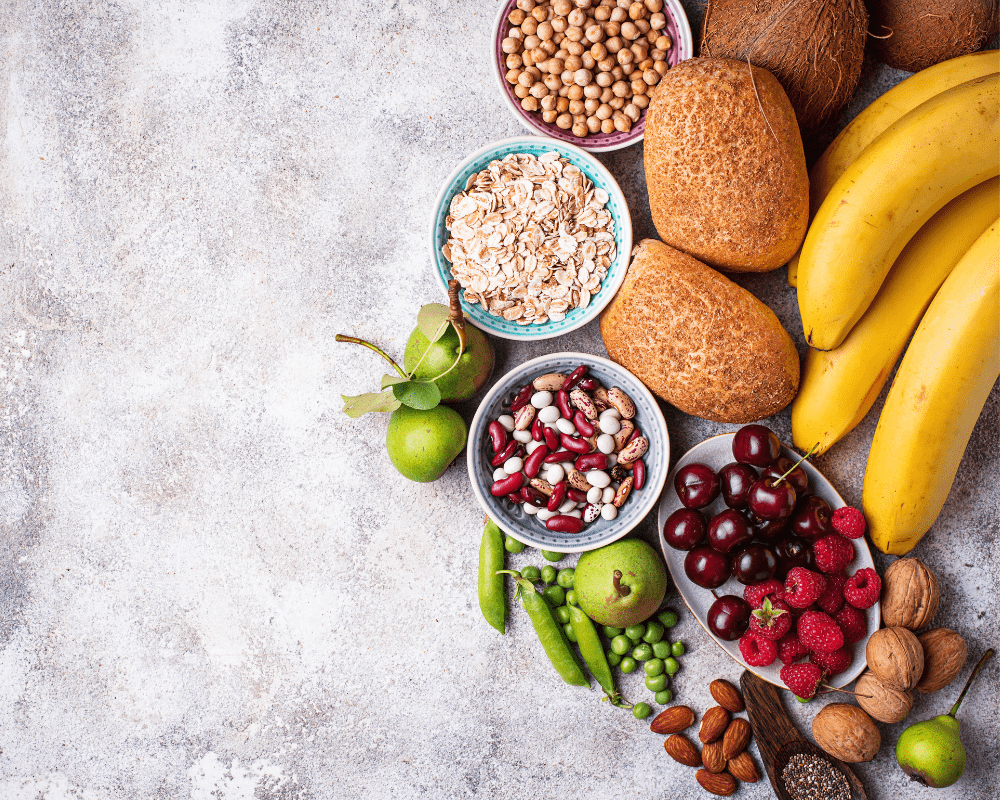
Dietary fiber is not one single substance. It includes a broad group of carbohydrates and plant components that resist digestion in the upper gastrointestinal tract to different degrees. Some fibers are highly fermentable, while others are fermented more slowly or pass through the colon with relatively little bacterial breakdown.
The part that matters for this discussion is microbiota-accessible carbohydrate: fiber, resistant starch, oligosaccharides, and other carbohydrates that reach the colon and can be used by anaerobic gut microbes.
As these microbes ferment carbohydrates, they generate short-chain fatty acids and gases. One of the major gaseous products is H₂.
Fermentable Carbohydrate
Fiber, resistant starch, and other undigested carbohydrates reach the large intestine.
Bacterial Fermentation
Gut microbes metabolize those substrates under anaerobic conditions.
H₂ + SCFAs
Fermentation generates H₂ along with acetate, butyrate, lactate, formate, CO₂, and other products.
Local + Systemic Exposure
H₂ can be consumed by other microbes, leave as flatus, or diffuse into blood and eventually be exhaled.
How Much Hydrogen Can the Human Gut Produce?
This is the part that surprises most people.
Molecular-hydrogen reviews have reported that humans can produce up to roughly 10–12 liters of H₂ per day in the intestine under high fermentative conditions. The exact amount is not fixed. It depends heavily on diet, how much fermentable carbohydrate reaches the colon, intestinal transit, and which hydrogen-producing and hydrogen-consuming microorganisms are present.
So when someone says, “If molecular hydrogen is useful, why would the body need an outside source if the gut already makes liters of it?” the question sounds reasonable—but it misses what happens to that hydrogen after it is produced.
Maximum intestinal H₂ production reported in molecular-hydrogen reviews. Individual production varies widely.
A classic estimate cited in gut-H₂ research suggests about 14% of large-intestinal H₂ readily diffuses into portal blood.
Absorbed H₂ is highly diffusible and is rapidly distributed and eliminated, especially through the lungs.
Where Does All That H₂ Go?
Much of the hydrogen generated in the colon never becomes a large systemic H₂ pool.
The 2023 gut-microbiome research makes this clear. H₂ can be consumed directly inside the colon by hydrogenotrophic microorganisms, including methanogens, sulfate reducers, and reductive acetogens. Some H₂ leaves the body as intestinal gas. Another portion crosses the intestinal wall and enters the portal circulation.
A widely cited estimate from Levitt, repeated in the pectin and resistant-starch research, states that approximately 14% of H₂ generated in the large intestine readily diffuses into the portal circulation.
That is important because portal blood travels first to the liver. In the pectin/high-amylose starch study, higher colonic H₂ production produced higher portal H₂ concentrations and was associated with less hepatic ischemia-reperfusion injury in rats. The investigators also estimated that a human consuming 20 g of lactose could reach an average portal H₂ concentration around 6.4–7.2 μmol/L.
H₂ that continues into the systemic circulation can reach the lungs very quickly and be exhaled. That is why breath-hydrogen testing works in the first place: hydrogen generated by gut fermentation crosses into blood, is transported to the lungs, and appears in exhaled breath.
Breath H₂ Is Evidence of Absorption—but Not Total Absorption
If H₂ is showing up in exhaled breath after a fermentable carbohydrate reaches the gut, some of that hydrogen had to cross the intestinal barrier and enter circulation. But breath H₂ represents only part of the total H₂ economy. Gut microbes consume H₂, some gas exits through the intestine, some is transiently present in tissues, and some is exhaled.
The Idea That Gut-Derived H₂ Might Matter Is Not New
One of the reasons I liked this topic enough to make an H2Minutes episode about it is that researchers had been thinking about endogenous hydrogen long before the modern hydrogen-water industry existed.
In 1988, R. J. Neale proposed that the epidemiological benefits associated with high dietary-fiber intake might be explained in part by molecular hydrogen produced during colonic fermentation. At the time, this was largely a hypothesis.
Later experimental studies made the idea much harder to ignore.
In 2009, researchers reported that reducing intestinal bacteria with antibiotics lowered endogenous H₂ and worsened Concanavalin A-induced hepatitis in mice, while introducing an H₂-producing strain of E. coli reduced liver inflammation.
In the pectin and resistant-starch study, dietary substrates that increased colonic H₂ also increased portal H₂ and were associated with protection against hepatic ischemia-reperfusion injury in rats.
Research on lactulose and acarbose has also explored whether increasing bacterial H₂ production could contribute to biological effects through oxidative-stress and inflammatory pathways. These studies do not mean that every benefit of fiber, lactulose, resistant starch, or acarbose is caused by H₂. But they established a serious scientific basis for endogenous hydrogen as one part of gut-host physiology.
H₂ Is Also a Regulator Inside the Gut Microbiome
The newer research added another layer that was not available when we made the original H2Minutes episode: hydrogen concentration can change what gut bacteria produce.
A 2023 study in Microbiome examined major human butyrate-producing bacteria and found that H₂ accumulation altered their fermentation pathways. In specific hydrogenase-containing butyrogens, higher H₂ favored production of metabolites such as butyrate, lactate, and formate.
Hydrogen Changes Their Metabolism
For bacteria that make H₂ during fermentation, accumulating hydrogen changes the thermodynamics of metabolism. Rather than simply stopping fermentation, some organisms redirect reducing power into products such as butyrate or lactate.
A Major Colonic Metabolite
Butyrate is an important fuel for colonocytes and has well-established roles in gut-barrier biology and inflammatory regulation. The 2023 study found that H₂ concentration can influence how much butyrate certain gut communities produce.
Methanogens Compete for H₂
Methanobrevibacter smithii consumes H₂ to produce methane. In the study’s synthetic community, adding this methanogen lowered H₂ and lowered butyrate production under the tested conditions.
Your Microbiome Matters
People differ substantially in hydrogen production and disposal. The same resistant-starch intervention can therefore create different H₂, methane, and short-chain-fatty-acid patterns depending on the microbial community.
This is why I would not reduce the fiber story to “fiber makes H₂, therefore H₂ explains fiber.” The gut is much more complex than that. What the newer research does show is that H₂ itself is part of the metabolic environment that helps determine how fermentation proceeds.
What About Hydrogen-Rich Water and the Gut Microbiome?
The relationship also appears to work in the other direction. Instead of only asking what the microbiome does to H₂, researchers are asking what externally administered H₂ may do to the microbiome.
Reviews of hydrogen-rich water describe preclinical and emerging human evidence involving gut-barrier integrity, microbial composition, butyrate-producing bacteria, inflammatory signaling, metabolic health, radiation-related intestinal injury, mycotoxin exposure, and other gastrointestinal outcomes.
At H2HUBB, we now organize this literature in the Gut Microbiome section of the H2HUBB Research Library. The evidence varies by condition and study design, but the gut has become a legitimate molecular-hydrogen research area rather than a side note.
Go From the H2Minutes Lesson Into the Actual Research
The original video was built to make one surprising idea easy to understand. The Research Library now lets you follow that idea into the studies themselves.
If the Gut Makes Liters of H₂, Why Can Hydrogen Water Still Matter?
This is where people can get tripped up.
The body may generate liters of hydrogen gas over an entire day, but total production is not the same thing as the H₂ concentration reaching the blood and tissues at one moment.
Endogenous H₂ is generated gradually and locally in the gut. Much of it is consumed by other microorganisms or lost before it ever becomes systemic. The portion that enters circulation is also cleared quickly, particularly through exhalation.
Hydrogen-rich water works differently. It gives you a concentrated bolus of dissolved H₂ over a short period of time. Pharmacokinetic research shows that orally administered H₂ can rapidly raise portal-vein H₂, exposing the liver and nearby tissues before hydrogen is redistributed or exhaled.
A High-Performance Hydrogen Bottle Can Deliver a Large H₂ Bolus
Here is a practical way I look at the scale.
In our newer H2HUBB testing of the HUVE PERFORM V2 hydrogen water bottle, a 10-minute cycle produced up to approximately 2.03 mg of dissolved H₂.
That conversion helps make a milligram dose easier to visualize. At normal room temperature, 2.03 mg of molecular hydrogen corresponds to approximately 24.6 mL of H₂ gas.
For another scale comparison, if we use a low-micromolar circulating H₂ range of 0.1–5 μmol/L as an illustrative working range, that converts at body temperature to approximately 0.0025–0.127 mL of H₂ gas equivalent per liter of blood. Across an estimated 5 L adult blood volume, that is roughly 0.013–0.64 mL of H₂ gas equivalent present at one moment.
In other words, the gas-equivalent amount contained in one 2.03 mg hydrogen-water serving is roughly 38 times the upper end of that illustrative momentary blood-pool calculation.
Endogenous H₂ and Hydrogen Water Are Different Exposure Patterns
Once you understand the kinetics, the apparent contradiction goes away.
Gut-derived H₂ is a continuous, variable, microbiome-dependent background source. Its production is tied to fermentation, and much of it is handled locally by the gut ecosystem.
Hydrogen water provides a deliberate dose over a much shorter time window. This creates a temporary rise in hydrogen availability that can reach portal blood and tissues before the gas is cleared.
That is why the existence of endogenous H₂ should not be used to dismiss hydrogen water. If anything, endogenous production gives us another reason to take the molecule seriously: the human body is already exposed to H₂ as part of normal gut physiology, while external H₂ administration allows us to deliberately alter the magnitude and timing of that exposure.
My Takeaway
I do not think fiber is healthy because of one secret molecule, and I do not think every effect of the microbiome should be credited to H₂. But the evidence now supports something much more interesting than the original “H₂ is just intestinal gas” view. Molecular hydrogen is produced in large quantities by gut fermentation, can enter the circulation, can influence microbial metabolism, and may be one of the biological links connecting diet, the microbiome, redox regulation, and host physiology.
Final Thoughts
When we originally made this H2Minutes episode, the “secret” was that eating fiber could cause your own gut bacteria to produce molecular hydrogen.
Today, I would take that lesson further.
H₂ is part of a complex microbial economy. It is produced by fermenters, consumed by other microbes, changes the thermodynamics of fermentation, can influence butyrate production, crosses into portal blood, reaches the liver, and is eventually exhaled.
At the same time, externally administered molecular hydrogen—especially high-quality hydrogen-rich water—can create rapid H₂ exposures that are very different from the slow background production occurring in the colon.
So no, I do not think the connection between fiber, the gut microbiome, and molecular hydrogen should be a secret anymore. It is one of the more fascinating examples of how H₂ connects basic human physiology with the therapeutic-hydrogen research field.
Watch the Original “Secret Benefit of Fiber” Lesson
This H2Minutes episode introduced the basic fiber-to-H₂ connection. The updated article above expands that lesson with newer gut-microbiome research, endogenous-H₂ physiology, portal absorption, and modern H2HUBB dose context.
Sources & Further Reading
- Molecular Hydrogen as an Emerging Therapeutic Medical Gas for Neurodegenerative and Other Diseases
- Pectin and high-amylose maize starch increase caecal hydrogen production and relieve hepatic ischaemia-reperfusion injury in rats
- H₂ generated by fermentation in the human gut microbiome influences metabolism and competitive fitness of gut butyrate producers
- Hydrogen-rich water as a modulator of gut microbiota?
- Hydrogen from intestinal bacteria is protective for Concanavalin A-induced hepatitis
- Lactulose: an effective preventive and therapeutic option for ischemic stroke by production of hydrogen
- Acarbose: a new option in the treatment of ulcerative colitis by increasing hydrogen production
- Dietary fibre and health: The role of hydrogen production
- Pharmacokinetics of hydrogen after ingesting a hydrogen-rich solution: A study in pigs
- H2HUBB Research Library: Gut Microbiome
- H2HUBB Molecular Hydrogen Research Library