
Why Drink Hydrogen Water If Your Gut Already Produces H₂?
This is one of the better questions I have received about hydrogen water: if our gut bacteria can already produce large amounts of molecular hydrogen every day, why would drinking a comparatively small amount of H₂ in water make any difference?
I have been asked different versions of this question for years. It gets directly into the apparent enigma between endogenous H₂—hydrogen made inside the body, primarily by gut microorganisms—and exogenous H₂, which we intentionally administer through hydrogen-rich water, inhalation, or another method.
I do not think we have every answer yet, but the pharmacokinetics and gut-microbiome research give us a much clearer picture than the question first suggests. The short answer is that the total amount of H₂ produced in the colon is not the same thing as the H₂ concentration and exposure pattern that reaches the blood and tissues at a given moment. Hydrogen water creates a rapid, concentrated H₂ pulse that is very different from the slower, microbiome-dependent background production occurring in the colon.
H2HUBB Takeaway
- Your gut can make a lot of molecular hydrogen. Reviews have estimated that colonic fermentation could generate up to roughly 10–12 liters of H₂ per day under high-fermentation conditions.
- Most of that H₂ does not become a large systemic blood pool. Gut microbes consume much of it, some leaves as intestinal gas, and absorbed H₂ is rapidly transported and exhaled.
- A classic estimate suggests about 14% of large-intestinal H₂ readily diffuses into portal blood. That is meaningful exposure, especially for the liver, but it still represents only part of total gut production.
- Hydrogen water is absorbed rapidly. Human breath measurements rise within minutes after drinking HRW, while pharmacokinetic research supports rapid gastrointestinal absorption and portal-vein exposure.
- Endogenous H₂ and hydrogen water create different exposure patterns. Gut-derived H₂ is a variable background source; hydrogen water creates a deliberate pulse or concentrated exposure.
- A high-performing bottle can deliver a meaningful amount of H₂ at once. H2HUBB testing of the HUVE PERFORM V2 measured approximately 2.03 mg of dissolved H₂ in one 230 mL serving after a 10-minute cycle.
In This Article
The Question That Started This Discussion
The original question came to me in an email:
Question
“Since water is absorbed in the small intestine after mixing with acid, etc., in the stomach after a few hours, how much ingested H₂ remains to actually be absorbed? The large intestine generates H₂ and other gases, so it seems to me that the H₂ in the water would mostly be reacting in the gut long before being absorbed into the blood.”
My answer began with the same point I would make today: this question involves the relationship between intestinal endogenous H₂ production and the observable effects of administering comparatively small amounts of exogenous H₂.
It is a real scientific question. The body may produce liters of hydrogen gas through bacterial fermentation, yet milligram-scale doses of hydrogen-rich water have produced measurable biological effects in experimental and human research. To understand why those two facts are not contradictory, we have to look at where the H₂ is produced, where it goes, how quickly it moves, and how long the exposure lasts.
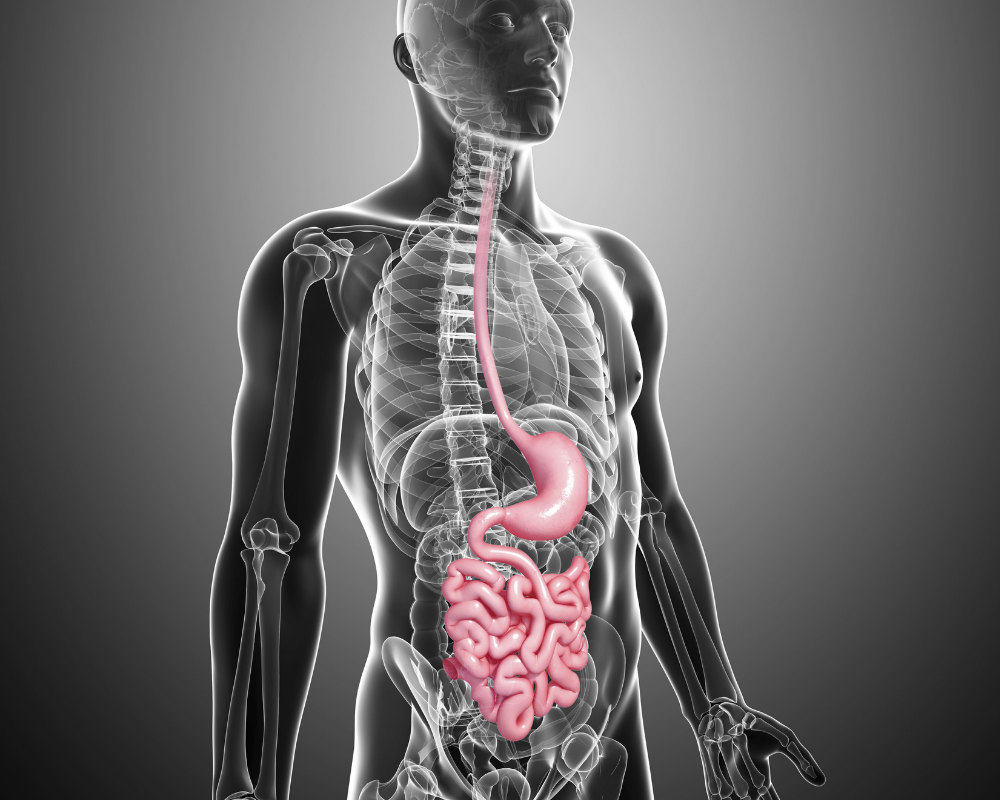
Hydrogen Water Does Not Sit in the Gut for Hours Before the H₂ Is Absorbed
First, I think it is important to correct the assumption that the dissolved H₂ in hydrogen water has to wait several hours for the water to move through the digestive tract before it can reach the blood.
Hydrogen is the smallest molecule and diffuses rapidly. Human breath studies show that after drinking hydrogen-rich water, exhaled H₂ rises quickly and commonly reaches its peak within roughly 10–15 minutes. The fact that H₂ appears in exhaled breath means it crossed the gastrointestinal barrier, entered the circulation, traveled to the lungs, and was breathed out.
Read the human breath-hydrogen study ↗
More recent pharmacokinetic research also supports rapid gastrointestinal uptake. Experimental work measuring portal-vein H₂ after administration of a highly concentrated H₂-rich solution showed that H₂ can enter portal blood quickly. The investigators discussed both the stomach wall and small intestine as important absorption sites.
Read the pharmacokinetic study of orally administered H₂ ↗
Hydrogen-Rich Water
Dissolved molecular hydrogen enters the stomach and upper GI tract.
GI Absorption
H₂ rapidly diffuses across gastrointestinal tissue rather than waiting for complete water absorption hours later.
Liver Exposure
Absorbed H₂ can enter portal circulation, exposing the liver before wider systemic distribution.
Lung Clearance
H₂ that reaches the circulation can rapidly appear in breath and leave the body through the lungs.
How Much Molecular Hydrogen Can the Gut Produce?
This is the part that makes the question so interesting. Humans really can produce substantial amounts of molecular hydrogen through carbohydrate fermentation in the colon.
A molecular-hydrogen review noted that roughly 40 grams of carbohydrate may reach the normal human colon each day and cited a theoretical production potential around 12,000 mL—or 12 liters—of H₂ per day. Depending on diet, the amount of fermentable carbohydrate reaching the colon, intestinal transit, and microbiome composition, production can vary dramatically from person to person and from day to day.
Read the molecular-hydrogen review ↗
I also want to clarify an older number I used in my original email. I said that humans “generally produce about 1.6 mL/min” of H₂ in the gut. The classic human work is more specific than that: fasting H₂ production averaged much lower, while approximately 1.6 mL/min was a mean peak rate after intestinal lactose administration. Food can raise production several-fold, so there is no single constant production rate that applies to everyone all day.
A high-end estimate for intestinal H₂ generation under substantial carbohydrate fermentation.
A classic estimate cited in later research for the fraction of large-intestinal H₂ readily diffusing into portal circulation.
Exhaled H₂ can rise rapidly after HRW consumption, showing that absorbed H₂ reaches systemic circulation quickly.
If the Gut Makes Liters of H₂, Where Does It All Go?
The answer is that gross intestinal production is not the same as systemic H₂ delivery.
Hydrogen is part of a microbial economy inside the colon. Some bacteria produce H₂ during fermentation, while other microorganisms use H₂ as a metabolic substrate. Major disposal pathways include methanogenesis, sulfate reduction, and reductive acetogenesis. Some H₂ is also lost as intestinal gas.
Read the endogenous-H₂ discussion ↗
Another portion crosses the intestinal barrier. A widely cited estimate from Levitt, repeated in later experimental work, states that approximately 14% of H₂ generated in the large intestine readily diffuses into portal circulation.
That 14% should not be treated like a universal human absorption constant. It is a useful physiological estimate that helps explain the route: H₂ made in the colon can diffuse into portal blood, and the liver is one of the first organs exposed.
Once H₂ reaches the circulation, the lungs become a major elimination route. In a human hydrogen-water study, investigators estimated that roughly 72% of the administered H₂ was recovered in exhaled breath under their experimental assumptions. That does not mean 72% of every hydrogen-water dose behaves identically in every person, but it clearly demonstrates how rapidly H₂ can move from the gastrointestinal tract to the blood and then out through the lungs.
Read the human H₂ exhalation study ↗
The Gut H₂ Story Is More Complex Than “Bacteria Make Gas”
One of the things I find most interesting is that newer research is showing H₂ is not simply a waste product sitting in the colon. It is part of the metabolic environment of the microbiome itself.
H₂ Can Change Bacterial Fermentation
Researchers found that H₂ concentration altered fermentation pathways in important butyrate-producing bacteria. In a synthetic community, lowering H₂ through a hydrogen-consuming methanogen also lowered butyrate production under the tested conditions.
Researchers Identified a Major Gut H₂-Producing System
A large human gut-microbiome analysis identified group B [FeFe]-hydrogenase as a primary driver of fermentative H₂ production and highlighted Bacteroides as an important H₂-producing group in healthy people.
This matters because it helps explain why endogenous H₂ production is so variable. Diet matters, but so do the organisms present, the enzymes they carry, intestinal pH, transit, available substrates, and which hydrogen-consuming organisms are competing for the gas.
It also reinforces why I would not look at “10 liters produced in the gut” and assume that the body is continuously bathing every tissue in a massive therapeutic H₂ dose. A large amount of that hydrogen is being produced, consumed, redirected, excreted, absorbed, distributed, and cleared dynamically.
Hydrogen Water Can Also Affect the Gut Differently
There is another side to the relationship. In a direct experimental comparison, long-term hydrogen-rich water and hydrogen inhalation produced different effects on the gut microbiome and plasma metabolome. Under those study conditions, HRW produced more marked changes in gut-microbial community structure than inhalation.
This supports a point I have made for years: the route of H₂ administration matters. Hydrogen water has direct contact with the gastrointestinal tract and portal system in a way that inhaled H₂ does not reproduce exactly.
Read the hydrogen water vs. inhalation microbiome study ↗
Read my H2HUBB comparison of hydrogen water and hydrogen inhalation →
Basal H₂ Exposure Is Not the Same as a Hydrogen-Water Pulse
This is where the apparent contradiction starts to disappear.
Basal H₂ simply means the background hydrogen that is present because the body is continuously exposed to gut-derived H₂. The exact level is not fixed. It changes with diet, microbiome composition, fermentation, breath H₂, intestinal transit, and the timing of measurements.
When I use a low-micromolar range such as 0.1–5 µmol/L to illustrate scale, I do not mean that every healthy person has a universal blood H₂ concentration within that exact range all day. I use it as a working example to help people visualize how small the instantaneous dissolved-H₂ pool can be compared with the amount contained in a concentrated hydrogen-water serving.
| Exposure | Endogenous Gut H₂ | Hydrogen-Rich Water |
|---|---|---|
| Source | Bacterial fermentation in the colon | Externally dissolved molecular hydrogen |
| Pattern | Continuous but highly variable background production | Rapid, deliberate pulse / concentrated exposure |
| Local use/loss | Substantial microbial consumption and intestinal loss | Some H₂ escapes before absorption; absorbed H₂ is rapidly distributed and exhaled |
| First major systemic route | Colon → portal circulation | Stomach / intestine → portal circulation |
| Controllability | Depends on diet and microbiome | Can measure concentration, water volume, and total mg of H₂ per serving |
If we convert an illustrative blood concentration of 0.1–5 µmol/L into a gas-equivalent volume at body temperature, that corresponds to approximately 0.0025–0.127 mL of H₂ per liter of blood. Across an estimated 5-liter adult blood volume, that works out to roughly 0.013–0.64 mL of H₂ gas equivalent present in the blood at one moment.
A High-Performance Hydrogen Bottle Helps Put the Difference in Perspective
Now we can compare that small instantaneous pool with a real hydrogen-water dose.
In H2HUBB’s independent testing of the HUVE PERFORM V2 hydrogen water bottle, the recommended 10-minute cycle produced an average concentration of approximately 8.82 mg/L in its 230 mL bottle. That equals approximately 2.03 mg of dissolved molecular hydrogen in one serving.
At normal room temperature, 2.03 mg of molecular hydrogen corresponds to approximately 24.6 mL of H₂ gas equivalent.
Compared with the upper end of the illustrative 0.64 mL momentary blood-pool calculation above:
That does not mean drinking the bottle makes your blood H₂ concentration 38 times higher. The H₂ does not all enter the blood at once or remain there. It is rapidly absorbed, diluted, distributed through tissues, and exhaled.
What the comparison does show is that a high-concentration hydrogen-water bottle can deliver a substantial transient pulse of H₂ relative to the very small amount of dissolved H₂ that may be present in the blood at one moment. That is the part people miss when they compare liters of gas produced in the colon with milligrams of H₂ dissolved in water.
Why I Do Not Discredit Hydrogen Water Because the Gut Makes H₂
The molecule is the same, but the exposure is not. Endogenous H₂ is continuously generated inside a microbial ecosystem where much of it is immediately consumed or lost. Hydrogen water lets us intentionally create a rapid spike in H₂ availability at a chosen time and repeat that exposure throughout the day.
To me, that makes a high-performing hydrogen-water product biologically meaningful even though the total amount of H₂ looks small when compared with theoretical daily gut production.
How I Think About the Older Dose Math
In my original email I tried to estimate blood and cellular H₂ concentration by subtracting the amount thought to be exhaled and then spreading the remaining H₂ across approximately 40 liters of total body water. The calculation looked like this:
I still think this math is useful for understanding scale, but I want to be very clear about what it can and cannot tell us. It is not a measured blood concentration and should not be treated as a direct conversion where every 1 mg consumed automatically creates 3.5 µmol/L in the blood and cells.
Hydrogen pharmacokinetics are more dynamic than that. H₂ is absorbed at different sites, reaches portal blood first, can be taken up by tissues, rapidly equilibrates across membranes, is continuously exhaled, and does not distribute as though the body’s 40 liters of water were one perfectly mixed container.
The better way to think about hydrogen-water dosing is to look at several variables together:
- Total dissolved H₂ per serving in milligrams.
- Concentration in mg/L.
- Serving volume.
- How quickly the water is consumed after H₂ production.
- How many exposures occur across the day.
- The biological target and study protocol we are trying to compare with.
That is also why H2HUBB evaluates hydrogen-water products by the amount of molecular hydrogen they can actually deliver—not simply by whether a machine produces bubbles or displays a large concentration number.
My Bottom Line: The Gut Producing H₂ Is a Reason to Take the Molecule Seriously, Not a Reason to Dismiss Hydrogen Water
I understand why the original question seems like a contradiction. If the gut can produce liters of hydrogen every day, a couple of milligrams dissolved in water can sound insignificant.
But once you look at the physiology, the comparison changes.
Much of gut-produced H₂ remains part of local microbial metabolism, is used by hydrogen-consuming organisms, leaves through intestinal gas, or is rapidly absorbed and exhaled. The amount reaching the blood and tissues at any one moment is much smaller and constantly changing.
Hydrogen water gives us something different: a controlled, concentrated, repeatable pulse of exogenous molecular hydrogen. It can reach portal circulation within minutes, expose the stomach, intestine, and liver along the way, and temporarily raise H₂ availability before the gas is distributed and cleared.
That does not mean we understand every mechanism. In fact, I think the relationship between endogenous and exogenous H₂ is one of the more interesting areas in hydrogen research. Newer microbiome studies are showing that hydrogen itself influences bacterial metabolism, while hydrogen-water studies continue to demonstrate that externally administered H₂ can affect biological systems despite the body’s normal background exposure.
So I would not underestimate a quality hydrogen-water bottle simply because the gut already makes H₂. The amount, location, timing, concentration, and pattern of exposure all matter.
Want to Explore the Research or Compare Hydrogen-Water Products?
H2HUBB independently tests hydrogen products and organizes the molecular-hydrogen literature so you can go beyond marketing claims and look at actual dose, performance, and research.
Hydrogen Water and Gut H₂: Common Questions
If my gut already produces hydrogen, is hydrogen water unnecessary?
No. Gut-derived H₂ and hydrogen-rich water create very different exposure patterns. Endogenous H₂ is produced gradually inside the colon and much of it is consumed locally or lost, while hydrogen water creates a rapid and deliberate pulse of H₂ through the upper gastrointestinal and portal route.
How quickly is molecular hydrogen absorbed from hydrogen water?
Human breath studies show measurable increases within minutes, commonly peaking around 10–15 minutes after drinking HRW. Experimental pharmacokinetic work also supports rapid gastrointestinal absorption and portal-vein exposure.
How much hydrogen can the gut produce?
Production varies greatly with diet, microbiome composition, intestinal transit, and fermentable carbohydrate intake. Reviews have cited a theoretical high-end production potential around 10–12 liters per day under substantial colonic fermentation, but that does not mean 10–12 liters enters systemic circulation.
Does all the H₂ in hydrogen water stay in the body?
No. Molecular hydrogen is rapidly distributed and eliminated, particularly through exhalation. That fast turnover is part of why hydrogen water is best understood as a transient pulse rather than a large reservoir that accumulates in the blood.
Why can a small milligram dose of hydrogen water matter?
The biological question is not only the total amount produced over 24 hours. Concentration, location, timing, route, and rate of exposure matter. A concentrated HRW serving can create a rapid rise in H₂ availability that is different from continuous low-level endogenous production.
Sources & Further Reading
- Shimouchi A, et al. Breath Hydrogen Produced by Ingestion of Commercial Hydrogen Water and Milk.
- Ichihara G, et al. Pharmacokinetics of hydrogen after ingesting a hydrogen-rich solution: a study in pigs.
- Ge L, et al. Molecular hydrogen: a preventive and therapeutic medical gas.
- Review discussing intestinal H₂ production and hydrogen-consuming pathways.
- Nishimura N, et al. Pectin and high-amylose maize starch increase caecal hydrogen production and relieve hepatic ischemia-reperfusion injury in rats.
- Campbell A, et al. H₂ generated by fermentation in the human gut microbiome influences metabolism and competitive fitness of gut butyrate producers.
- Welsh C, et al. A widespread hydrogenase supports fermentative growth of gut bacteria in healthy people.
- Different effects of hydrogen-rich water intake and hydrogen gas inhalation on gut microbiome and plasma metabolites of rats.
- H2HUBB independent HUVE PERFORM V2 hydrogen-water testing.
- H2HUBB: Fiber & Molecular Hydrogen—How Gut Bacteria Produce H₂.
- H2HUBB: Hydrogen Water vs. Hydrogen Inhalation—Which One Is Better?
- H2HUBB Molecular Hydrogen Research Library.