
Alkaline Water vs. Hydrogen Water: What Actually Matters?
People often ask me whether hydrogen water is better than alkaline water. But before we can answer that, we have to separate two things that are constantly mixed together: the properties of the water and the technology used to make it. An alkaline water ionizer and a dedicated hydrogen water generator can both use electrolysis, but they are designed around different goals. Once you understand that difference, the entire comparison becomes much easier.
Key Takeaways
- Alkaline pH and dissolved molecular hydrogen are not the same thing. A water ionizer can produce both, but one does not tell you how much of the other is present.
- Conventional alkaline water ionizers were primarily designed to separate water into alkaline and acidic streams. Molecular hydrogen is produced on the cathode side as part of that electrochemical process.
- Dedicated hydrogen water generators are designed specifically around H₂ production and dissolution. Modern PEM/SPE systems can generate hydrogen without needing to push the drinking water to a high pH.
- If your goal is molecular hydrogen, the number that matters most is the amount of H₂ you actually receive. At H2HUBB, we evaluate measured hydrogen concentration, dose, product design, consistency, and safety—not pH alone.
- Both technologies can have a place. The better system depends on whether your priority is multiple ionized-water functions or deliberate, measurable molecular-hydrogen delivery.
This article comes directly from the teaching framework I used in H2Minutes Episode 66, where I broke down alkaline water ionizers and hydrogen water generators from the electrochemistry up. The original lesson walks through the cathode, anode, oxidation, reduction, PEM/SPE membranes, source-water conductivity, hydrogen dissolution, and the practical pros and cons of both technologies.
That basic comparison still holds today, but H2HUBB has evolved considerably since the original article was published in 2023. We now test hydrogen products against defined performance standards, organize molecular-hydrogen research in the H2HUBB Research Library, and evaluate products based on what they actually deliver rather than what a marketing label implies.
First: Hydrogen Water Is Not the Same Thing as Alkaline Water
This distinction is the foundation of the entire discussion. Hydrogen water is water containing dissolved molecular hydrogen gas (H₂). Alkaline water simply describes water with a pH above neutral. A water can be alkaline and contain very little dissolved H₂, or it can contain meaningful levels of molecular hydrogen while remaining close to its original pH.
This is also why I do not think consumers should judge a hydrogen-water product by pH alone. The biological literature on hydrogen-rich water is studying molecular hydrogen exposure. Modern reviews of electrolyzed reduced water have also helped clarify that much of the biological activity historically attributed to “reduced” or alkaline ionized water can be explained by dissolved H₂ and conventional chemistry rather than the higher pH by itself.
The Simple H2HUBB Rule
If you are buying a machine because you want hydrogen water, ask how much molecular hydrogen it actually delivers—not simply how alkaline the water becomes.
Electrolysis: The Process Both Systems Have in Common
To understand why these machines behave differently, we first need to understand electrolysis. In simple terms, electrolysis uses electrical energy to drive chemical reactions in water.
There are always two electrodes: the cathode, where reduction occurs, and the anode, where oxidation occurs. The old chemistry acronym still works well here: OIL RIG—Oxidation Is Loss, Reduction Is Gain. Oxidation involves the loss of electrons, while reduction involves the gain of electrons.
How an Alkaline Water Ionizer Works
A conventional alkaline water ionizer uses source-water minerals and electrical conductivity to drive electrolysis while separating the water into two streams. The cathode side produces the alkaline drinking-water stream, while the anode side produces the acidic stream.
At the cathode, water is reduced and hydrogen gas is produced:
Those hydroxide ions help raise the pH of the cathode-side water. At the same time, molecular hydrogen gas is being formed. That is why traditional alkaline ionizers can also produce a form of hydrogen-rich water often referred to as electrolyzed reduced water.
This is one of the most important historical points in this discussion. These machines existed long before the modern molecular-hydrogen research field developed. They were marketed primarily around alkaline pH, ionized water, negative ORP, and other explanations. As molecular-hydrogen research advanced, it became increasingly clear that dissolved H₂ was an important variable that earlier explanations often failed to isolate.
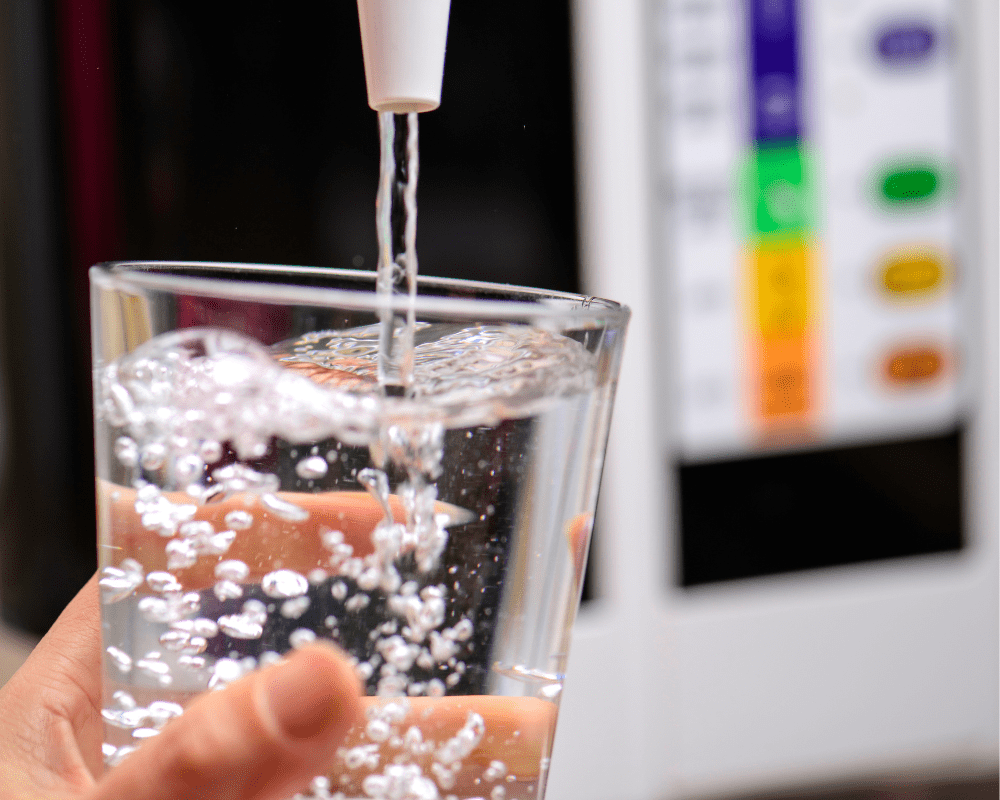
Advantages of Alkaline Water Ionizers
Strengths
- The technology has been used for decades and is well established.
- Many systems can dispense relatively large volumes of water quickly.
- They can produce multiple water streams for different household uses.
- Some ionizers can produce meaningful dissolved H₂ when the source water, flow rate, electrical settings, and cell design are favorable.
Limitations
- Hydrogen output can be highly dependent on source-water conductivity and machine settings.
- High flow rates can reduce contact time and dissolved-H₂ concentration.
- High-pH operation can increase scaling and mineral precipitation inside the system.
- A high pH or strongly negative ORP does not by itself tell you the actual molecular-hydrogen dose.
- Hydrogen production is one function of a system that was originally designed to do more than simply make hydrogen water.
How a Dedicated Hydrogen Water Generator Works
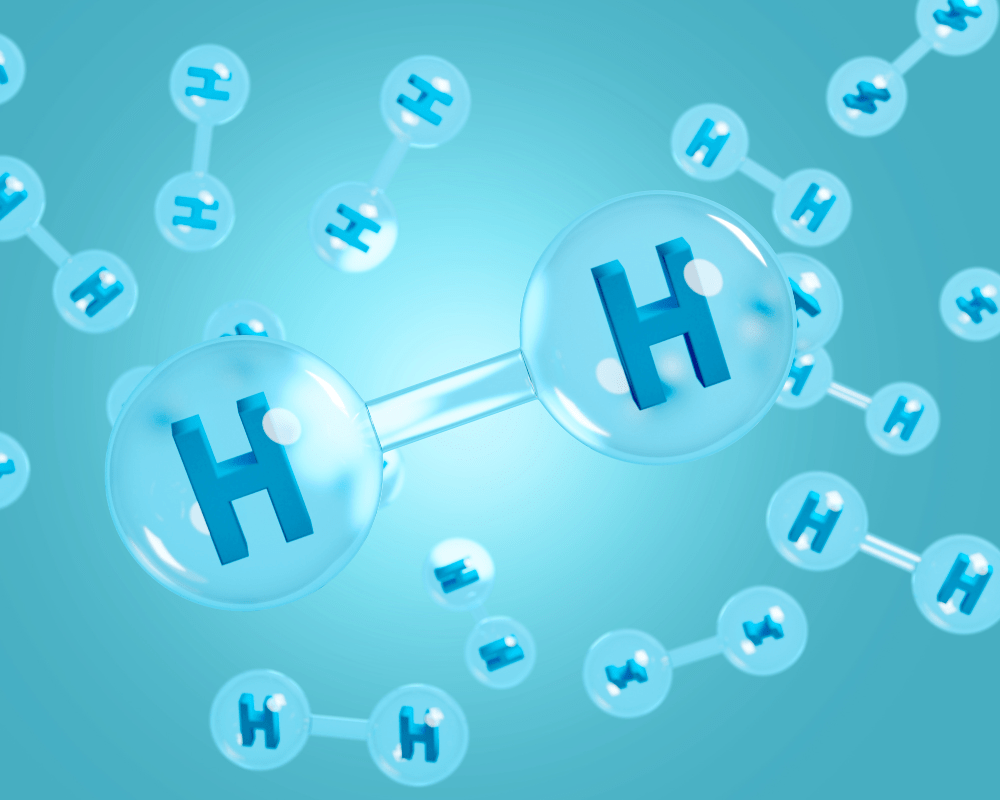
A dedicated hydrogen water generator approaches the problem differently. Its primary purpose is not to make the drinking water alkaline. Its purpose is to generate molecular hydrogen and get that gas dissolved into the water efficiently.
Many modern hydrogen-water systems use PEM/SPE technology. PEM stands for Proton Exchange Membrane, while SPE refers to the Solid Polymer Electrolyte used in the cell. In a PEM electrolyzer, water is oxidized on the anode side:
The protons move through the membrane toward the cathode, while the electrons travel through the electrical circuit. At the cathode they recombine:
That cell architecture allows the system to generate a dedicated hydrogen-gas stream that can then be dissolved into drinking water. Depending on the product, the H₂ may be infused immediately—as with many bottles and pitchers—or transferred into a separate dissolver or pressurized chamber in larger hydrogen infusion machines.
Why PEM/SPE Changes the Practical Comparison
A conventional ionizer relies heavily on the mineral content and conductivity of the source water because that drinking water is part of the electrolysis environment. Many dedicated PEM/SPE hydrogen systems separate hydrogen production from the drinking-water chemistry much more effectively. That gives the manufacturer greater control over H₂ generation and makes it possible to produce hydrogen water without substantially changing the pH of the water being consumed.
Dedicated systems can also use pressure, fine-bubble diffusion, recirculation, membranes, or other dissolver technology to improve how much of the generated hydrogen actually stays in solution. That matters because molecular hydrogen has low solubility and escapes readily from open water.
Advantages of Dedicated Hydrogen Water Generators
Strengths
- Designed specifically to generate and dissolve molecular hydrogen.
- Can provide more predictable H₂ output across different source-water conditions, depending on system architecture.
- Can produce hydrogen-rich water without deliberately increasing drinking-water pH.
- Often incorporates dedicated dissolution or pressurization technology.
- Can make it easier to reach a meaningful H₂ dose without relying on extremely high water intake.
- Many modern portable bottles, pitchers, and larger infusion machines use this architecture.
Limitations
- Some larger systems dispense more slowly than traditional high-flow water ionizers.
- Not every PEM product performs well; cell quality, pressure, cycle time, volume, venting, and dissolution design still matter.
- Portable devices can vary dramatically in measured H₂ output, so a PEM label alone is not proof of performance.
- Dedicated hydrogen generators usually provide fewer non-drinking-water functions than a multipurpose alkaline ionizer.
Alkaline Water Ionizer vs. Hydrogen Water Generator
| Feature | Alkaline Water Ionizer | Dedicated Hydrogen Water Generator |
|---|---|---|
| Primary design goal | Create separated alkaline and acidic water streams | Generate and dissolve molecular hydrogen into drinking water |
| Typical electrolysis approach | Conventional mineral-dependent electrolysis with separated water streams | Commonly PEM/SPE electrolysis with dedicated H₂ generation |
| Effect on pH | Intentionally raises cathode-side drinking-water pH | Often designed to leave drinking-water pH close to its original level |
| Source-water dependence | Hydrogen production can vary significantly with conductivity/mineral content | Often less dependent on drinking-water conductivity for H₂ generation |
| Hydrogen concentration | Can be meaningful but often varies with flow, water chemistry, settings, and machine design | Designed for deliberate and more controlled H₂ production/dissolution |
| Flow rate | Often higher | Can be lower, especially with systems using longer contact time or pressurization |
| Scaling tendency | Can be higher at strong alkaline settings in mineral-rich water | Often lower in the H₂ production cell, depending on architecture and maintenance |
| Best fit | User wants multiple ionized-water functions in one machine | User’s primary goal is measurable molecular-hydrogen delivery |
So Which System Is Better for Drinking Hydrogen Water?
If the question is simply, “Which machine is better at making alkaline water?”, then an alkaline ionizer is obviously designed for that job.
But if the question is, “Which machine is better if my primary goal is molecular hydrogen?”, I generally favor a system that was engineered around hydrogen production, hydrogen dissolution, measured H₂ concentration, and actual dose.
That does not mean every dedicated hydrogen generator is automatically better than every ionizer. I have tested enough hydrogen products to know that labels do not guarantee performance. A poorly designed PEM bottle can underperform, while a well-designed water ionizer can produce meaningful hydrogen-rich water under the right conditions.
The better question is not, “Which category wins?” The better question is: what does this specific product actually deliver?
We Test the Hydrogen—Not the Marketing Term
At H2HUBB, our product-evaluation framework is built around therapeutic relevance, practical home-use safety, and verified performance. For hydrogen-water products, that means looking at the actual dissolved H₂ concentration, serving volume, estimated H₂ dose, consistency, production method, unwanted byproducts, and whether the product can reasonably deliver what the consumer is buying it to deliver.
That calculation is much more useful than simply knowing that a machine produces pH 9.5 water or has a negative ORP. If your goal is molecular hydrogen, the amount of molecular hydrogen you actually receive is the part we care about.
You can review our current H2HUBB Product Performance Standards to see how we evaluate different hydrogen-water product categories.
What I Would Look for Before Buying Either System
- Measured dissolved H₂ concentration. Look for real testing, not only manufacturer marketing.
- Actual H₂ dose per serving. Concentration means more when you combine it with the volume you will realistically drink.
- Independent testing. Hydrogen output can vary substantially from advertised claims.
- Water requirements. Know whether the product needs a specific mineral content, filtration level, distilled water, or other source-water condition.
- Cell and membrane design. PEM/SPE is important, but the overall engineering still determines performance.
- Safety and byproduct control. The drinking-water side should be protected from unwanted electrolysis byproducts such as chlorine or ozone where relevant.
- Your actual goal. Do you want alkaline/acidic water functions, or are you primarily trying to get molecular hydrogen?
Final Thoughts
The biggest mistake in the alkaline-water-versus-hydrogen-water discussion is treating these as if they are simply two names for the same thing. They are not.
Alkaline water describes a pH characteristic. Hydrogen water describes the presence of dissolved molecular hydrogen gas. A traditional water ionizer can produce both at the same time, but the amount of H₂ depends on the machine, source water, flow rate, settings, and operating conditions. A dedicated hydrogen-water generator is designed specifically to control H₂ production and get that gas into the water without making alkaline pH the primary objective.
From my perspective, if molecular hydrogen is the reason you are buying the system, then the product should be evaluated by measured hydrogen performance, dose, consistency, safety, and real-world usability. That is the standard I use when comparing these technologies at H2HUBB.
Watch the Original Lesson
This article was built from my H2Minutes breakdown of alkaline water ionizers versus hydrogen water machines. The video walks through the electrolysis process visually and shows why the machine design matters.
Sources & Further Reading
- Electrolyzed-Reduced Water: Review I. Molecular Hydrogen Is the Exclusive Agent Responsible for the Therapeutic Effects
- Hydrogen Water: Extra Healthy or a Hoax?—A Systematic Review
- A comprehensive review of molecular hydrogen as a novel complementary option in nutritional therapy
- H2HUBB Molecular Hydrogen Research Library
- H2HUBB Product Performance Standards
- H2HUBB: How to Make Hydrogen Water
- H2HUBB: Hydrogen Water Bottle Test—What Consumers Need to Know