HBS10 Hydrogen Inhaler Review, Test Results & Discount
Product Review & Independent Test Results
Review the product overview, H2HUBB testing information, measured performance when available, pricing, specifications, and buying guidance.
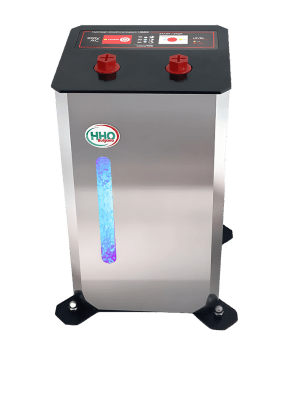
This HBS10 review covers a compact household oxyhydrogen inhalation device manufactured by Hydrogen Technologies Bulgaria. The HBS10 hydrogen inhaler produces a measured blend of approximately two parts molecular hydrogen to one part oxygen and can also direct gas through a hydrogen-water accessory. This page includes independent H2HUBB test results, inhaled-H₂ estimates, specifications, potassium-hydroxide safety guidance, pricing, and the current HBS10 discount.
Independent H2HUBB gas-displacement testing measured approximately 297 mL/min of molecular hydrogen and approximately 445 mL/min of total oxyhydrogen gas at SATP. These results closely confirmed the manufacturer’s stated performance of approximately 300 mL/min H₂ and 450 mL/min total gas.
HBS10 Review & Independent Oxyhydrogen Test Results
HBS10 Hydrogen Inhaler Review & Test Results
The HBS10 hydrogen inhaler is a compact household oxyhydrogen inhalation device manufactured by Hydrogen Technologies Bulgaria. Unlike a PEM pure-hydrogen system, the HBS10 uses non-membrane alkaline electrolysis to produce a combined gas containing approximately two parts molecular hydrogen and one part oxygen.
Independent H2HUBB gas-displacement testing measured approximately 297 mL/min of molecular hydrogen, equivalent to approximately 24.5 mg/min of H₂. Total oxyhydrogen production measured approximately 445 mL/min at SATP.
These results closely confirmed the manufacturer’s stated performance of approximately 300 mL/min of hydrogen and 450 mL/min of total H₂/O₂ gas. The measured mixture contained approximately 66.7% hydrogen by volume, consistent with the expected two-to-one hydrogen-to-oxygen ratio produced by water electrolysis.
Using the current H2HUBB inhaled-H₂ concentration model, approximately 297 mL/min of verified hydrogen output corresponds to approximately 1.32–1.52% estimated inhaled H₂ at an adult resting minute ventilation of 6.5–7.5 L/min. VE, or minute ventilation, is the total volume of air breathed per minute.
The estimate applies approximately 20 seconds of active inhalation during each minute of nasal-cannula use, producing an effective inhalation-phase hydrogen delivery of approximately 99 mL/min. Actual concentration varies with breathing pattern, minute ventilation, cannula fit, mouth breathing, tubing resistance, and gas leakage.
Oxyhydrogen and Brown’s Gas Inhaler Design
The HBS10 is also described as a Brown’s gas inhaler or HHO inhalation device. Hydrogen and oxygen are generated together within the non-membrane electrolytic cell rather than separated by a PEM membrane.
H2HUBB recommends describing the device publicly as an oxyhydrogen system rather than a pure-hydrogen inhaler. The approximately 297 mL/min test result represents the hydrogen component of the measured 445 mL/min combined-gas output.
H2HUBB Safety and Operational Assessment
H2HUBB identified low-water protection with a start-lock function, an electronic electrolyte-level indicator, a humidifier reservoir, backflow protection, internal cooling, heat management, and a stainless-steel enclosure.
The HBS10 exceeded H2HUBB’s minimum hydrogen-flow requirement and closely confirmed its manufacturer-rated output. Based on its measured inhalation performance and evaluated operating safeguards, it received the H2HUBB Seal of Approval.
Approval does not eliminate the hazards associated with potassium hydroxide, mixed hydrogen-and-oxygen gas, improper electrolyte preparation, insufficient humidifier maintenance, or exposure to an ignition source. Responsible operation and complete adherence to the current manual remain essential.
Hydrogen Water Attachment
The HBS10 includes an attachment for bubbling gas through water. However, the pitcher supplied with the evaluated unit leaked around the gas-input connection during the first day of testing. H2HUBB was therefore unable to complete a formal dissolved-hydrogen evaluation.
No specific dissolved-hydrogen concentration should be presented as independently verified by H2HUBB. The HBS10 recommendation and Seal of Approval apply primarily to the device’s inhalation performance.
Keep the cannula, tubing, device, and produced oxyhydrogen gas away from flames, sparks, smoking materials, static discharge, hot surfaces, and all other ignition sources.
Learn more about the standards used to evaluate this oxyhydrogen inhalation device in the H2HUBB Product Performance Standards.
Shop the HBS10 through the H2HUBB hydrogen marketplace and receive the current $425 HBS10 discount. The savings are applied automatically at checkout, reducing the $2,124 retail price to $1,699.
About Hydrogen Technologies Bulgaria
Hydrogen Technologies Bulgaria develops and manufactures oxyhydrogen generators, hydrogen inhalation equipment, hydrogen-water accessories, and related components. Manufacturer materials identify Hydrogen Technologies EOOD in Varna, Bulgaria, as the producer of the HBS10.
The company states that its equipment is manufactured in the European Union and that the HBS10 has undergone CE-related testing and gas-composition analysis. H2HUBB’s evaluation was conducted independently and focused on actual hydrogen output, total oxyhydrogen production, operation, and safety design.
About the HBS10 Oxyhydrogen Inhalation Device
The HBS10 combines a stainless-steel housing, non-membrane electrolytic cell, potassium-hydroxide electrolyte, humidification and filtration reservoir, electronic liquid-level monitoring, and 20-, 30-, and 45-minute operating timers.
Independent H2HUBB testing measured approximately 297 mL/min of molecular hydrogen and approximately 445 mL/min of total oxyhydrogen gas. The results closely agreed with the manufacturer ratings of approximately 300 mL/min H₂ and 450 mL/min combined gas.
Additional manufacturer and distributor information is available through the current HBS10 product listing and operating manual.
Shop Through H2HUBB
Shop the HBS10 through H2HUBB to access independently measured hydrogen output, current inhaled-H₂ estimates, potassium-hydroxide safety guidance, specifications, the official H2HUBB report, and exclusive marketplace savings.
Pricing
H2HUBB Regular Price: $2,124
H2HUBB Discount Price: $1,699
Current Savings: $425 automatically applied at checkout
Current European Listing: Approximately €2,100 through HHO France
Warranty and Service Requirements
Warranty descriptions vary between existing seller materials. The current manufacturer manual states that warranty coverage may extend up to approximately 25 months, subject to its complete terms.
The manual also states that the system must be inspected by an authorized service provider every six months for warranty eligibility. Buyers should obtain the current written warranty, service schedule, international shipping terms, and return conditions before completing the purchase.
HBS10 Discount & Current Offer
H2HUBB’s current marketplace offer provides a $425 HBS10 discount. The discount is applied automatically at checkout, reducing the displayed $2,124 retail price to $1,699.
Oxyhydrogen Inhalation Device Specifications
The HBS10 is a compact non-membrane Brown’s gas inhaler that generates a combined mixture containing approximately two parts hydrogen and one part oxygen.
H2HUBB-Verified Gas Performance
- Verified H₂ Output: Approximately 297 mL/min at SATP
- Verified H₂ Mass Output: Approximately 24.5 mg/min
- Verified Total Oxyhydrogen Output: Approximately 445 mL/min at SATP
- Calculated Non-H₂ Component: Approximately 148 mL/min, primarily oxygen
- Measured Hydrogen Fraction: Approximately 66.7%
- Manufacturer-Rated H₂ Output: Approximately 300 mL/min
- Manufacturer-Rated Total Gas Output: Approximately 450 mL/min
- Manufacturer Performance Confirmed: Yes
- Flow-Test Method: Gas displacement
- Results Standardization: SATP
- Test Dates: April 14 through May 20, 2022
- H2HUBB Status: H2HUBB Seal of Approval for inhalation performance
H2HUBB Inhaled-Hydrogen Estimate
- Total Verified H₂ Production: Approximately 297 mL/min
- Effective H₂ During Inhalation Phases: Approximately 99 mL/min
- Estimated Inhaled H₂: Approximately 1.32–1.52%
- Resting Minute Ventilation Model: 6.5–7.5 L/min
- Inhalation Duty Model: Approximately 20 seconds inhaling per minute
Actual concentration varies with resting ventilation, breathing pattern, cannula or mask fit, tubing configuration, mouth breathing, and gas leakage.
Electrolysis and Electrolyte Specifications
- Electrolysis Type: Non-membrane alkaline electrolysis
- Gas Type: Combined oxyhydrogen or Brown’s gas
- Cell Configuration: Series-cell configuration
- Required Electrolyte: Potassium hydroxide or KOH
- Evaluated KOH Quantity: Approximately 50 grams
- Evaluated Solution Volume: Approximately 500 mL
- Evaluated Concentration: Approximately 10% or 1.8 M
- Electrolyzer Reservoir: Approximately 500 mL
- Humidifier Reservoir: Approximately 400 mL
- Test Water: Distilled water at approximately pH 6.0
- Test Temperature: Approximately 61–66°F or 16.1–18.8°C
Electrical Specifications
- Power-Supply Applied Voltage: Manufacturer-rated 12 V
- Power-Supply Current: Manufacturer-rated 10 A
- Power-Supply Rating: Approximately 120 W
- Input Options: Manufacturer-listed 115, 230, or 277 V configurations
- 115 V Current: Approximately 1.7 A
- 230 V Current: Approximately 0.9 A
- 277 V Current: Approximately 0.7 A
Operation and Controls
- Operating Modes: Oxyhydrogen inhalation and hydrogen-water production
- Session Timers: 20, 30, and 45 minutes
- Power Control: Separate power button
- Start and Stop Control: Initiates or pauses gas production
- Timer Selection: Hold start/stop for approximately three seconds
- Maximum Pause: Approximately 15 minutes before automatic shutdown
- Status Indicators: Power, gas production, and electrolyte level
- Low-Level Start Lock: Prevents operation at insufficient electrolyte level
Safety Components
- Electronic electrolyte-level monitoring
- Low-water start-lock protection
- Water filtration and humidification reservoir
- Backflow-control function through the humidifier
- Internal cooling fan
- Heat management through the stainless-steel enclosure
- Visual humidifier-water-level inspection
- Sound and light operating signals
Potassium Hydroxide Safety
- KOH is caustic and can cause serious skin or eye injury.
- Use suitable chemical-resistant gloves and protective eyewear.
- Prepare the electrolyte only as directed by the current manufacturer manual.
- Keep the electrolyte away from children, pets, food, and incompatible materials.
- Never operate the system without the properly filled humidifier and filter.
- H2HUBB recommends fresh distilled humidifier water every 10–15 operating hours.
- Replace or service the electrolyte according to the current manual.
- Keep all produced gas away from every ignition source.
Physical Specifications
- Height: Approximately 30 cm or 11.8 inches
- Length: Approximately 19 cm or 7.5 inches
- Width: Approximately 20 cm or 7.8 inches
- Loaded Weight: Approximately 6.5 kg or 14.3 lb
- Housing: Stainless steel
- Mobility: Compact housing with support feet
Hydrogen Water Attachment
- Included Function: Gas diffusion into drinking water
- H2HUBB Evaluation Status: Incomplete
- Reason: Tested pitcher leaked around its gas-input seal
- Verified Dissolved-Hydrogen Result: None
- H2HUBB Recommendation: Position the HBS10 primarily as an inhalation device
Product Benefits
HBS10 Oxyhydrogen Inhalation System Benefits
- Independently verified hydrogen output:
H2HUBB measured approximately 297 mL/min of molecular hydrogen. - Verified total gas performance:
The Brown’s gas inhaler produced approximately 445 mL/min of combined H₂/O₂ gas. - Confirmed manufacturer rating:
The measured results closely matched the stated 300 mL/min H₂ and 450 mL/min total output. - Documented inhaled-H₂ estimate:
Verified output corresponds to approximately 1.32–1.52% estimated inhaled hydrogen at rest. - Compact household configuration:
The stainless-steel system weighs approximately 14.3 lb when filled. - Simple timer controls:
Users can select 20-, 30-, or 45-minute sessions. - Low-water operating protection:
The electronic level system prevents the device from starting when the electrolyte level is too low. - Gas filtration and humidification:
The water-filled reservoir conditions the outgoing gas and assists with vapor filtration and backflow control. - Visible operating status:
Sound and light indicators show power, gas production, and liquid-level conditions. - Independent marketplace approval:
The HBS10 exceeded H2HUBB’s minimum hydrogen-flow standard and received the H2HUBB Seal of Approval. - Exclusive H2HUBB savings:
The current $425 HBS10 discount is applied automatically at checkout.
Ideal For
Who the HBS10 Hydrogen Inhaler Is Ideal For
- Home users seeking independently verified oxyhydrogen output
from a compact inhalation system. - Customers comparing Brown’s gas inhalers
who want H2HUBB-measured hydrogen and total-gas results. - Users seeking approximately 1.32–1.52% estimated inhaled H₂
at typical adult resting ventilation. - Buyers wanting a compact stainless-steel device
with 20-, 30-, and 45-minute session controls. - Customers who value low-water protection
and visible electrolyte-level monitoring. - Users comfortable maintaining an alkaline electrolyzer
and following detailed electrolyte and humidifier procedures. - Adults capable of safely handling potassium hydroxide
with suitable protective equipment and secure chemical storage. - Buyers primarily interested in inhalation performance
rather than relying on the unverified hydrogen-water attachment. - Users prepared to follow strict ignition precautions
for a combined hydrogen-and-oxygen gas system. - Shoppers seeking an HBS10 discount
through the H2HUBB hydrogen marketplace.
The HBS10 requires more hands-on chemical handling and maintenance than a distilled-water-only PEM inhaler. It is best suited to users who understand the responsibilities associated with potassium-hydroxide electrolyte, humidifier maintenance, and oxyhydrogen ignition precautions.
Similar Hydrogen Products
Compare additional products in related H2HUBB marketplace categories.