HydroGenie Brown's Gas Generator Review, Test Results & Price
Product Review & Independent Test Results
Review the product overview, H2HUBB testing information, measured performance when available, pricing, specifications, and buying guidance.
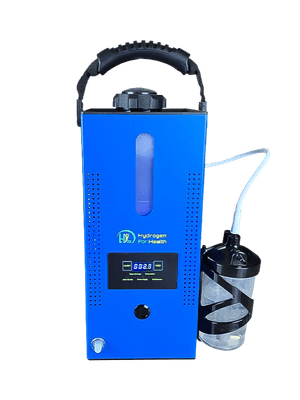
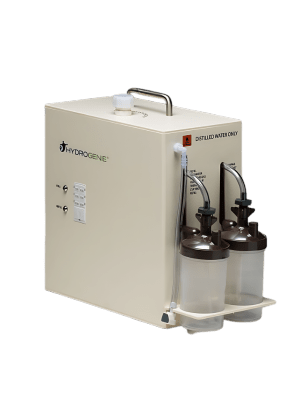
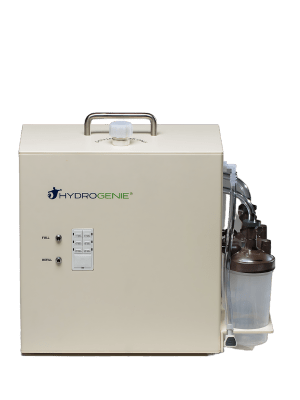
This HydroGenie review covers the HydroGenie Brown’s gas generator, a three-function molecular hydrogen machine designed for oxyhydrogen inhalation, hydrogen-water infusion, and direct gas application. This page includes independent H2HUBB test results, specifications, inhaled-H₂ estimates, safety information, the current HydroGenie price, and available HydroGenie deals.
Independent H2HUBB testing measured an average total oxyhydrogen output of approximately 397.20 mL/min, containing approximately 262.15 mL/min of molecular hydrogen. The results confirmed the manufacturer’s approximate startup output claim but did not confirm the substantially higher warm-operating output claim.
HydroGenie Review & Independent Test Results
HydroGenie Review & Test Results
The HydroGenie is a three-function Brown’s gas generator manufactured by Hydrogen Research LLC. It uses alkaline water electrolysis to produce a premixed oxyhydrogen stream containing approximately two parts molecular hydrogen and one part oxygen by gas volume.
The molecular hydrogen machine is designed for oxyhydrogen inhalation, hydrogen-water infusion, and direct gas application. Because it produces hydrogen and oxygen together without membrane separation, it differs from a pure-H₂ PEM/SPE inhaler.
Independent H2HUBB testing measured an average total gas output of approximately 397.20 mL/min. The molecular-hydrogen component averaged approximately 262.15 mL/min, equivalent to approximately 21.6 mg of H₂ per minute.
HydroGenie Brown’s Gas Generator Performance
Ten gas-flow measurements taken during a 30-minute operating session ranged from approximately 364–428 mL/min of total oxyhydrogen gas.
The corresponding molecular-hydrogen output ranged from approximately 240.42–282.48 mL/min. The highest measured result was equivalent to approximately 23.4 mg of H₂ per minute.
The measured average confirmed the manufacturer’s approximate startup claim of 400 mL/min total gas and 267 mL/min molecular hydrogen.
Warm-Operating Output Claim Disclosure
At the time of the H2HUBB evaluation, the manufacturer claimed approximately 800 mL/min of total oxyhydrogen gas after the system reached operating temperature, including approximately 534 mL/min of hydrogen.
H2HUBB did not confirm that claim. The measured electrical current supported a calculated theoretical hydrogen maximum of approximately 282 mL/min. The report concluded that producing 534 mL/min of hydrogen would have required materially more current than the evaluated power supply provided.
The current HydroGenie product page now advertises up to approximately 850 mL/min of total gas and 567 mL/min of hydrogen once operating temperature is reached. That current claim may represent a revised product configuration, but it was not verified in the 2019 H2HUBB report.
Estimated Inhaled Hydrogen Concentration
Using the current H2HUBB inhaled-H₂ concentration model, the verified average hydrogen output of 262.15 mL/min corresponds to approximately 1.17–1.34% estimated inhaled hydrogen for one adult at a resting minute ventilation of 6.5–7.5 L/min.
The highest measured hydrogen result of 282.48 mL/min corresponds to approximately 1.26–1.45% estimated inhaled H₂ under the same breathing assumptions.
VE, or minute ventilation, is the total amount of air breathed each minute. H2HUBB’s model applies approximately 20 seconds of active inhalation per minute during nasal-cannula use.
Actual inhaled concentration varies with breathing rate, minute ventilation, cannula placement, mouth breathing, tubing resistance, bubbler condition, moisture accumulation, and gas leakage.
Molecular Hydrogen Machine Electrical Performance
The evaluated system operated at approximately 13.8 V and 37.10 A at the electrolytic cell, producing approximately 512 W of measured electrolysis power.
Based on the measured current, H2HUBB calculated a theoretical maximum hydrogen-production rate of approximately 282 mL/min, or 23.4 mg/min. This closely matched the highest measured result of 282.48 mL/min.
Hydrogen-Water Infusion Test
H2HUBB also bubbled the generated gas into approximately eight ounces of distilled water using the supplied air stone.
- 5 Minutes: Approximately 0.5 mg/L
- 10 Minutes: Approximately 0.5 mg/L
- 15 Minutes: Approximately 0.6 mg/L
- Average: Approximately 0.5 mg/L
These results indicate that the supplied infusion method produced comparatively modest dissolved-hydrogen concentrations under the tested open-container conditions.
Controls and Operating Modes
The HydroGenie includes an inhalation control panel with session selections of 1, 5, 10, 15, 20, and 30 minutes, along with a constant-on setting.
A gas-activation button initiates electrolysis. The system uses distilled water with a manufacturer-supplied sodium-hydroxide electrolyte packet.
Two external bubblers are intended to condition the oxyhydrogen stream and reduce the possibility of moisture reaching the cannula. The 2019 report did not include independent gas-purity testing after the bubblers.
HydroGenie Safety Assessment
Brown’s Gas is a premixed hydrogen-and-oxygen gas. The mixture can ignite or detonate when exposed to a flame, spark, static discharge, hot surface, improper pressure, or another ignition source.
The gas should be produced only as needed and should never be deliberately stored, compressed, accumulated, or sealed inside a closed container.
Sodium hydroxide is caustic and can injure the eyes or skin. Users must follow the current manual, use appropriate eye and hand protection, avoid direct contact, and store the electrolyte away from children and pets.
H2HUBB specifically questioned why the original package did not include safety goggles and protective gloves. Buyers should obtain suitable protective equipment before handling or mixing the electrolyte.
The two-bubbler design may reduce moisture or electrolyte carryover, but the original report requested additional gas-purity information from the manufacturer. H2HUBB did not independently verify the final gas purity.
Reliability Disclosure
Based on its verified startup-level output, measured electrical performance, simple operating controls, and evaluated safety design, the HydroGenie received the H2HUBB Seal of Approval.
Learn more in the H2HUBB Hydrogen Inhalation Therapy Guide and review the H2HUBB Product Performance Standards.
HydroGenie Price and Deals
The current publicly listed HydroGenie price is $1,997.
Shop through the H2HUBB hydrogen marketplace to view the current HydroGenie price and any newly available HydroGenie deals, partner promotions, or discount codes.
About Hydrogen Research LLC
Hydrogen Research LLC develops and sells the HydroGenie line of Brown’s gas and molecular-hydrogen equipment. The company identifies Ed Wunder as the developer behind the original HydroGenie system.
The company markets the HydroGenie as a three-function system for oxyhydrogen inhalation, hydrogen-water infusion, and direct gas application. Hydrogen Research states that the current unit is assembled in the United States.
Additional manufacturer information is available through the official HydroGenie product page.
Independent H2HUBB Evaluation
H2HUBB evaluated the HydroGenie between December 17, 2018, and April 10, 2019.
The system averaged approximately 397.20 mL/min of total oxyhydrogen gas, including approximately 262.15 mL/min of molecular hydrogen.
The results confirmed the manufacturer’s startup-level output but did not confirm the original higher output claimed after the system reached operating temperature.
Shop Through H2HUBB
Shop the HydroGenie through H2HUBB to access independent gas-flow testing, inhaled-H₂ estimates, electrical analysis, water-infusion results, safety disclosures, current pricing, the official H2HUBB test report, and available marketplace offers.
Current Price
Current Manufacturer Price: $1,997
Current H2HUBB Page Price: $1,997
Historical 2019 H2HUBB Discount: 10%, reducing the price to $1,798
The historical discount should not be presented as currently active unless Hydrogen Research reconfirms the agreement.
Current Included Package
- One HydroGenie unit
- One water-infusion attachment
- One application cup
- Two nasal cannulas
- One six-foot extension hose
- One electrolyte packet
- Operation manual
Distilled water is required but is not included with the machine.
Warranty and Returns
Hydrogen Research currently lists a three-year warranty on the hydrogen generator and a one-year warranty on electronic components.
The current return policy allows returns within 60 days. Used machines are subject to a 20% restocking fee, deduction of the accessory-pack value, and nonrefundable shipping costs. Customers are responsible for return shipping.
Buyers should review the complete current warranty and return policies before placing an order.
HydroGenie Deals
No separate HydroGenie discount is currently displayed publicly. Shop through H2HUBB for the current $1,997 price and any available partner promotions, coupon codes, or future HydroGenie deals.
HydroGenie Brown’s Gas Generator Specifications
The HydroGenie is an alkaline-electrolysis molecular hydrogen machine that produces premixed oxyhydrogen gas for inhalation, water infusion, and direct application.
H2HUBB-Verified Gas Performance
- Average Total Gas Output: Approximately 397.20 mL/min
- Average Hydrogen Output: Approximately 262.15 mL/min
- Average Hydrogen Mass: Approximately 21.6 mg/min
- Total Gas Range: Approximately 364–428 mL/min
- Hydrogen Range: Approximately 240.42–282.48 mL/min
- Highest Measured H₂: Approximately 282.48 mL/min or 23.4 mg/min
- Gas Composition: Approximately 66% H₂ and 33% O₂
- Startup Claim Confirmed: Yes
- Original Warm-Output Claim Confirmed: No
- H2HUBB Status: H2HUBB Seal of Approval
H2HUBB Inhaled-Hydrogen Estimate
- Average Verified H₂: Approximately 262.15 mL/min
- Effective H₂ During Inhalation Phases: Approximately 87.38 mL/min
- Estimated Inhaled H₂: Approximately 1.17–1.34%
- Highest Verified H₂: Approximately 282.48 mL/min
- Highest Verified Estimated Inhaled H₂: Approximately 1.26–1.45%
- Resting Minute Ventilation Model: 6.5–7.5 L/min
- Inhalation-Duty Model: Approximately 20 seconds inhaling per minute
Actual inhaled concentration varies with breathing pattern, cannula fit, minute ventilation, mouth breathing, bubbler condition, tubing resistance, moisture, and gas leakage.
Manufacturer Output Claims
- Original Startup Total Gas Claim: Approximately 400 mL/min
- Original Startup H₂ Claim: Approximately 267 mL/min
- Original Warm Total Gas Claim: Approximately 800 mL/min
- Original Warm H₂ Claim: Approximately 534 mL/min
- Current Manufacturer Total Gas Claim: Up to approximately 850 mL/min
- Current Manufacturer H₂ Claim: Up to approximately 567 mL/min
- Verification Disclosure: The 2019 H2HUBB report confirmed startup-level output but did not confirm either warm-operating claim
H2HUBB Electrical Measurements
- Electrolysis Voltage: Approximately 13.8 V DC
- Electrolysis Current: Approximately 37.10 A DC
- Electrolysis Power: Approximately 512 W
- Cell Configuration: Two cathodes with one shared anode
- Calculated Theoretical H₂ Maximum: Approximately 282 mL/min
- Calculated Theoretical H₂ Mass: Approximately 23.4 mg/min
- Power-Supply Label: 12 V, 30 A, and 360 W
Hydrogen-Water Test Results
- Test Volume: Approximately 8 oz of distilled water
- 5-Minute Result: Approximately 0.5 mg/L
- 10-Minute Result: Approximately 0.5 mg/L
- 15-Minute Result: Approximately 0.6 mg/L
- Average Result: Approximately 0.5 mg/L
- Infusion Method: Open glass with supplied air stone
Electrolysis and Water Requirements
- Electrolysis Type: Alkaline electrolysis without membrane separation
- Electrolyte: Sodium hydroxide
- Required Water: Distilled water
- Preferred Tested Reservoir Volume: Approximately 0.8 L or 28 oz
- Test-Water pH: Approximately 6.0 before electrolyte addition
- Test-Water Temperature: Approximately 61–66°F or 16.1–18.8°C
Session Controls
- One-minute setting
- Five-minute setting
- Ten-minute setting
- Fifteen-minute setting
- Twenty-minute setting
- Thirty-minute setting
- Constant-on mode
- Separate gas-activation control
Current Manufacturer Functions and Package
- Oxyhydrogen inhalation
- Hydrogen-water infusion
- Direct gas application
- One water-infusion attachment
- One application cup
- Two nasal cannulas
- One six-foot extension hose
- One electrolyte packet
- Operation manual
- 110/120 V or 220/240 V configuration selected when ordering
Safety Considerations
- Produces combustible premixed hydrogen and oxygen
- Generated gas must remain away from every ignition source
- Gas should not be stored, compressed, or confined
- Sodium hydroxide requires eye and skin protection
- Two external gas bubblers condition the gas stream
- Independent final-gas purity testing was not included in the report
- Inspect cannulas, tubing, bubblers, and fittings before every session
Physical Specifications Disclosure
- 2019 Tested-Housing Dimensions: Approximately 12.5 × 12 × 6.5 inches
- Current Official Store Weight: Approximately 13 lb
- Current Official Store-Listed Dimensions: Approximately 18.5 × 10 × 17.5 inches
- Difference Disclosure: Confirm whether the current dimensions represent a revised machine, assembled accessories, or shipping measurements
Reliability-Test Disclosure
- New-Device Evaluation: Completed
- Three-Month Reliability: Not available
- Six-Month Reliability: Not available
- One-Year Reliability: Not available
- Appropriate Description: Independently performance-tested, not long-term reliability-tested
Product Benefits
HydroGenie Molecular Hydrogen Machine Benefits
- Independently measured startup-level performance:
H2HUBB verified an average of approximately 262.15 mL/min of molecular hydrogen. - Verified peak hydrogen output:
The highest measured result was approximately 282.48 mL/min. - Three operating functions:
The package supports gas inhalation, water infusion, and direct gas application. - Documented inhaled-H₂ estimate:
The verified average corresponds to approximately 1.17–1.34% estimated inhaled hydrogen under the stated breathing model. - Multiple session selections:
Users can choose timed sessions from one to 30 minutes or continuous operation. - Dual external bubblers:
The bubbler arrangement is intended to condition the gas and reduce moisture reaching the cannula. - Replaceable components:
Hydrogen Research states that the system is designed so its major components can be serviced or replaced. - Current warranty coverage:
The manufacturer lists three years on the generator and one year on electronic components. - Complete starter package:
The current package includes inhalation, infusion, and direct-application accessories. - Independent marketplace approval:
The HydroGenie received the H2HUBB Seal of Approval. - Current marketplace pricing:
H2HUBB provides access to the current $1,997 price and any available HydroGenie deals.
Ideal For
Who the HydroGenie Is Ideal For
- Users specifically seeking a HydroGenie Brown’s gas generator
rather than a pure-hydrogen PEM/SPE machine. - Customers wanting one molecular hydrogen machine
for inhalation, water infusion, and direct gas application. - Buyers who value independently tested startup-level performance
rather than relying solely on manufacturer output claims. - Users seeking approximately 262 mL/min of verified average H₂ output
from the tested configuration. - Users targeting approximately 1.17–1.34% estimated inhaled H₂
under the stated adult resting-ventilation model. - Customers wanting flexible session controls
from one minute through continuous operation. - Users willing to perform hands-on maintenance
involving distilled water, electrolyte, bubblers, tubing, and periodic cleaning. - Buyers prepared to handle sodium hydroxide safely
using appropriate eye protection, gloves, storage, and mixing procedures. - Customers who understand oxyhydrogen ignition risks
and will follow the manufacturer’s safety instructions closely. - Shoppers researching the HydroGenie price or HydroGenie deals
through the H2HUBB hydrogen marketplace.
The HydroGenie is not the best match for someone seeking a maintenance-minimal pure-H₂ generator. It requires sodium-hydroxide electrolyte, bubbler maintenance, water management, and strict oxyhydrogen safety practices.
Buyers should also understand that H2HUBB confirmed startup-level performance but did not confirm the higher warm-operating output currently advertised by the manufacturer.
Similar Hydrogen Products
Compare additional products in related H2HUBB marketplace categories.